Plug-In Solar in the US: The Complete 2026 Guide
How plug-in (balcony) solar works, what it costs, what it won't do, how safety certification works, and how to check whether it's allowed where you live.

Plug-in solar is a small solar setup, usually one to a few panels, that feeds power into your home through an ordinary-looking plug. It trims your electric bill without a roof, an installer, or a big loan. Whether you can legally use one depends on your state, your building, and your utility.
What plug-in solar is
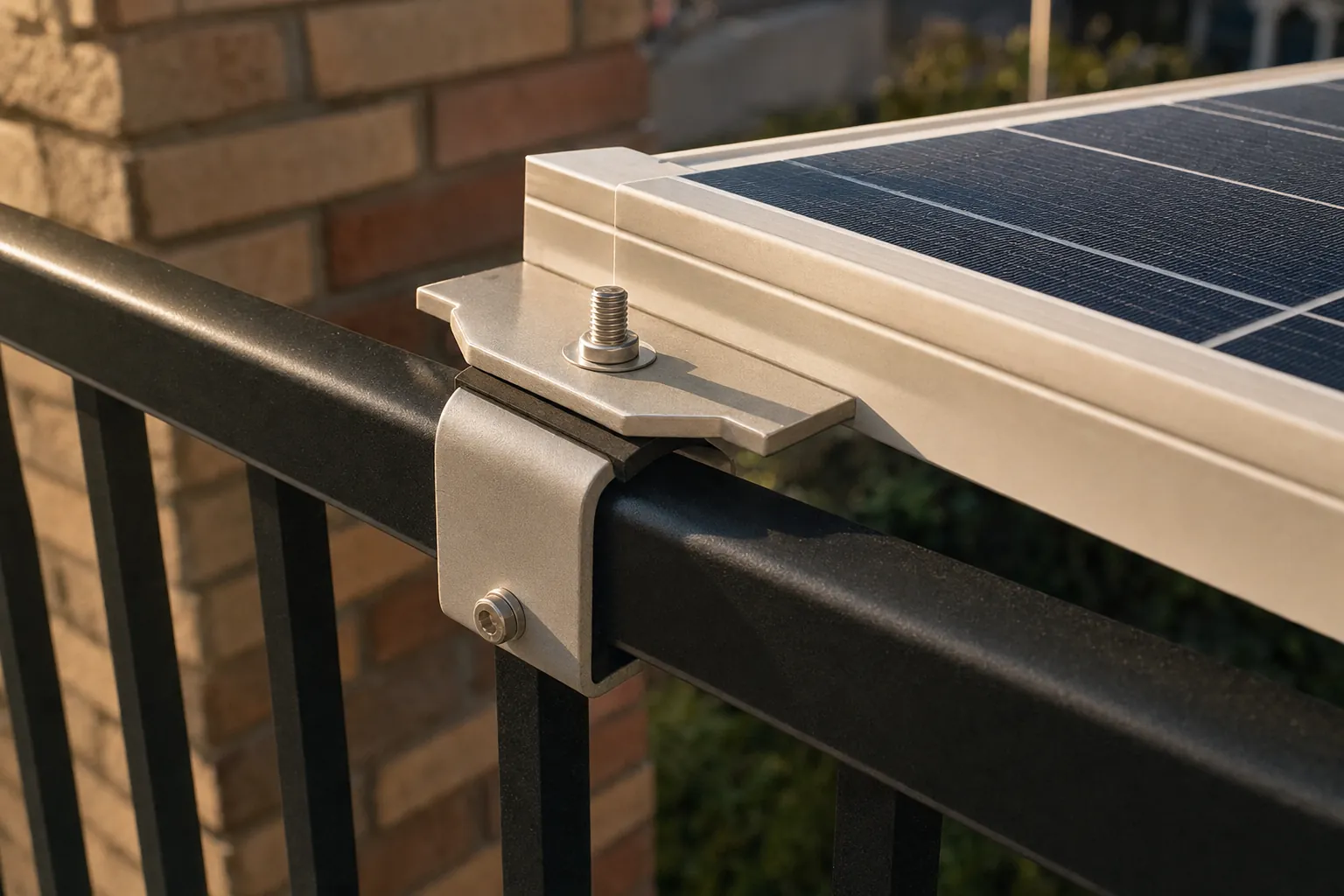
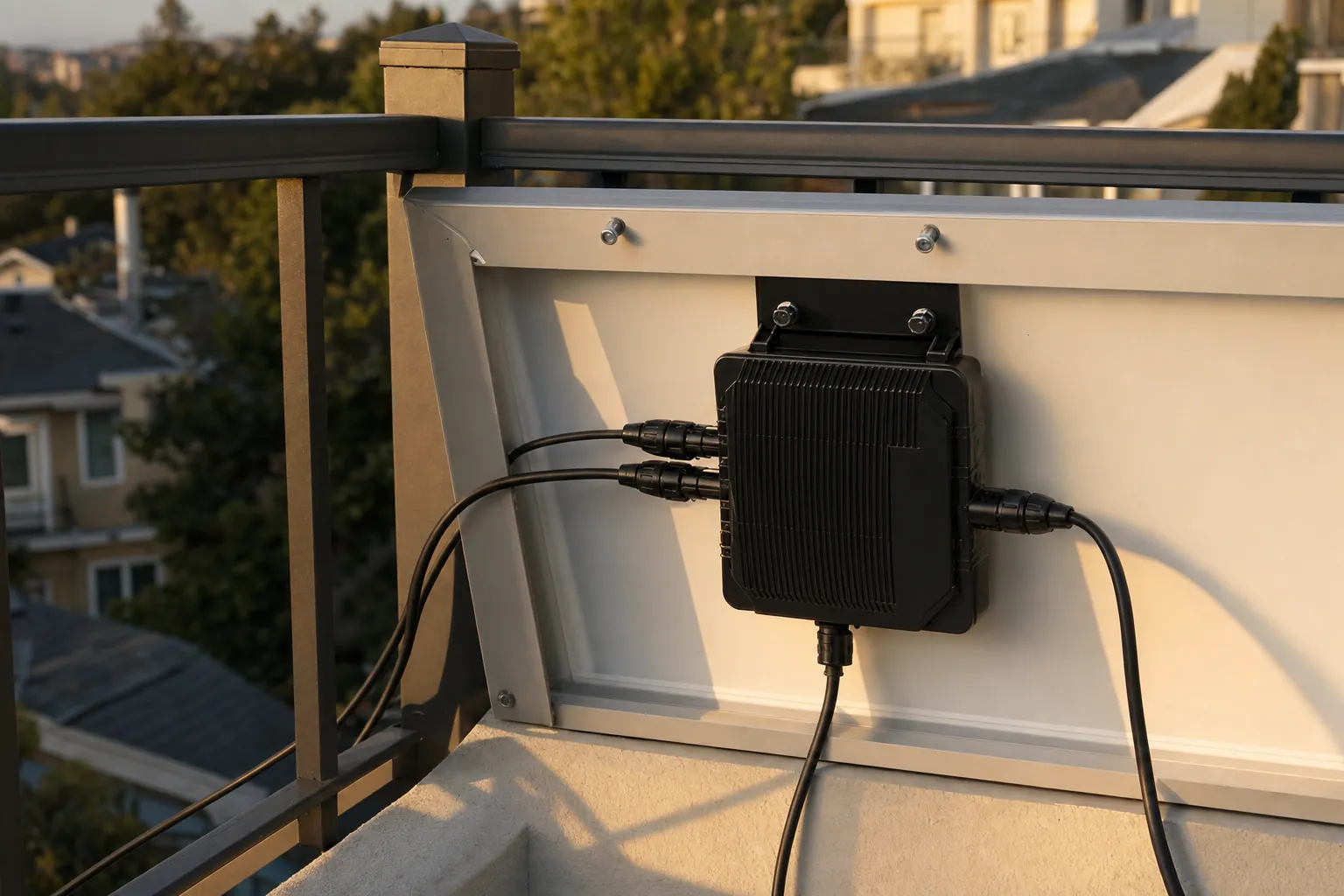
A plug-in kit has three parts: one or more solar panels, a microinverter that turns the panels' direct current into household alternating current, and a cord that plugs into an outlet. Some kits add a battery. Most are sold to hang on a balcony railing, lean on a patio, or sit in a yard.
Lawrence Berkeley National Laboratory (LBNL) researchers, writing in 2025, define these devices by one feature: they "backfeed power into the home through an AC plug." They are sold as retail hardware rather than installed as a construction project. That's what makes them cheap and easy to set up, and it's also where the safety and legal questions come from.
You will also see it called balcony solar. It's the same equipment. Germany is the biggest example: LBNL reports more than 1 million units had been sold by the end of 2024, with a registration system and an 800 W limit.
What the German experience does and doesn't tell you
Germany got there slowly. According to LBNL, the German certification body VDE set out safety requirements for plug-in PV in 2017, and a 2018 rule allowed up to 600 W without an electrician, based on a Fraunhofer study of worst-case backfeed. The limit was later raised to 800 W. A simple online registration form arrived in 2019, and LBNL calls it a turning point in winning utility acceptance.
The lesson doesn't transfer directly. German homes run on 230 V circuits and recessed outlets. US homes use 120 V circuits and the standard NEMA 5-15 plug, which LBNL notes is not fully touch-safe. By LBNL's arithmetic, the same overload margin Germans accept would allow only 420 W per household on US 120 V circuits.
How it works
- The panel makes DC power whenever light hits it.
- The microinverter converts that to AC power that matches your home's electricity.
- The cord pushes that power back through the outlet into the circuit it's plugged into.
- Anything running in your home uses that power first. Your fridge, router, and devices on standby draw less from the grid while the panel is producing.
You don't have to switch anything on. The meter sees your home pulling less from the grid while the sun is up.
If the panel makes more than your home is using at that moment, the extra flows out to the grid. LBNL notes that utilities treat unapproved export differently: some ignore it, some start an interconnection process, and some have cut off service. Some kits are designed to prevent export entirely, using a sensor that tells the inverter to stop feeding when your home's draw drops. Whether export is allowed, and whether you get paid for it, depends on your state and utility.
What happens in a power outage
A grid-tied plug-in inverter shuts off when the grid goes down. Inverters that meet UL 1741 already do this through a feature called anti-islanding, which keeps power off the lines so utility crews aren't hurt, per the LBNL review. So a basic kit will not keep your lights on in a blackout. If a kit has a battery with its own outlet, devices plugged straight into that outlet may keep running. That is a different feature from sending power into your wall, so check the spec sheet for it.
What it will and won't do
What it does:
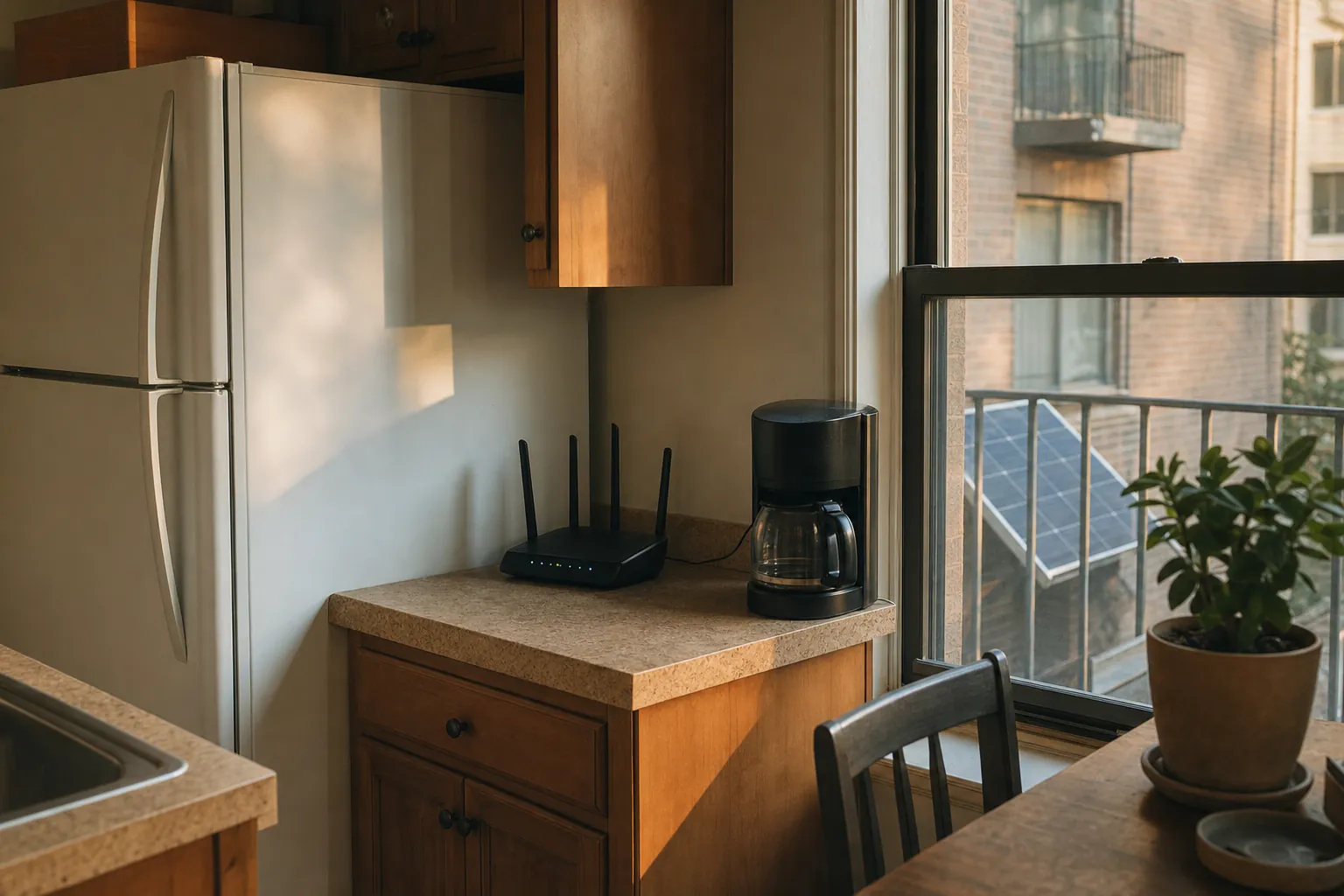
- Offsets the power your home is using while the sun is on the panel.
- Moves with you. A clamp or a stand comes off, and the kit goes to the next apartment. LBNL lists portability as one of the main advantages for renters.
- Skips most of the cost of rooftop solar. LBNL notes that rooftop prices are now driven mostly by soft costs (engineering, permitting, labor, overhead), which plug-in kits largely avoid.
What it doesn't do:
- It won't erase your bill. A kit is small next to a typical home's use. See plug-in vs rooftop solar for the size difference.
- It won't keep power on in an outage (see above).
- It won't do much on a north-facing or heavily shaded balcony. Which way the panel faces and how much shade it gets will change your output a lot, so model your own spot rather than trusting a box claim.
- It won't pay for itself fast everywhere. Payback depends mostly on your electricity rate and your sun.
- For scale: an unshaded 800 W panel hanging on a south-facing railing makes roughly 630 to 1,020 kWh a year across the lower 48, by our model. Output is lowest along the Gulf Coast, where the summer sun sits high overhead, and highest in the clear, high-altitude West. Run your own numbers.
What it costs
Kit prices span a wide range. As one example, Bright Saver, a nonprofit, listed a one-panel 180 W kit at $285.30 (member price) and a two-panel 360 W kit at $414.17 when we checked in September 2026. Kits with larger inverters and a built-in battery cost more. LBNL notes that adding storage raises system cost and lengthens payback.
Your savings come down to two numbers: how many kilowatt-hours the panel makes that your home actually uses, and what you pay per kilowatt-hour. The second one varies a lot. In June 2026 the average US residential price was 18.34 cents per kWh, and state averages in the lower 48 ran from about 13 cents to about 35 cents, according to the US Energy Information Administration. Every kilowatt-hour your kit makes is worth nearly three times as much at 35 cents as at 13 cents.
Published payback figures mostly come from Europe, where rates and rules differ. The calculator uses your state's rate and sun and shows its assumptions, so use it instead of a headline number.
Tax credits
The federal Residential Clean Energy Credit (section 25D) is gone for new purchases. The IRS says it is not allowed for expenditures made after December 31, 2025, and an expenditure counts as made when installation is completed. Anything installed in 2026 doesn't qualify, whether or not a plug-in kit would have counted. State or utility incentives may exist; check your state page.
Where the law stands
Before 2025, no US state had a law written for plug-in solar. Since then a growing number of states have passed laws creating a category for small plug-in devices, and more have bills moving. The state laws differ on:
- the maximum wattage allowed
- which safety certification the equipment needs
- whether you must notify your utility
- whether an interconnection agreement is required
- whether landlords or homeowner associations can restrict it
Every enacted state law in our dataset requires the equipment to be certified by a nationally recognized testing laboratory, but they don't all name the same standard. Some name UL 3700, one names UL 1741, and several name no standard number at all.
We don't list state statuses here because they change and each needs its own source. The state-by-state hub has every state with its status, the bill or statute, and the date we last checked it.
Three separate authorities can have a say, and a state law doesn't always settle all three. Your state sets the broad rule. Your local building or electrical department enforces the electrical code. Your utility controls what connects to its grid under your service agreement. Our permit guide walks through each one.
According to UL Solutions, the 2026 National Electrical Code, like every edition before it, does not recognize plug-in PV modules.
Safety
UL Solutions has published its analysis of the risks specific to plug-in solar. It names three:
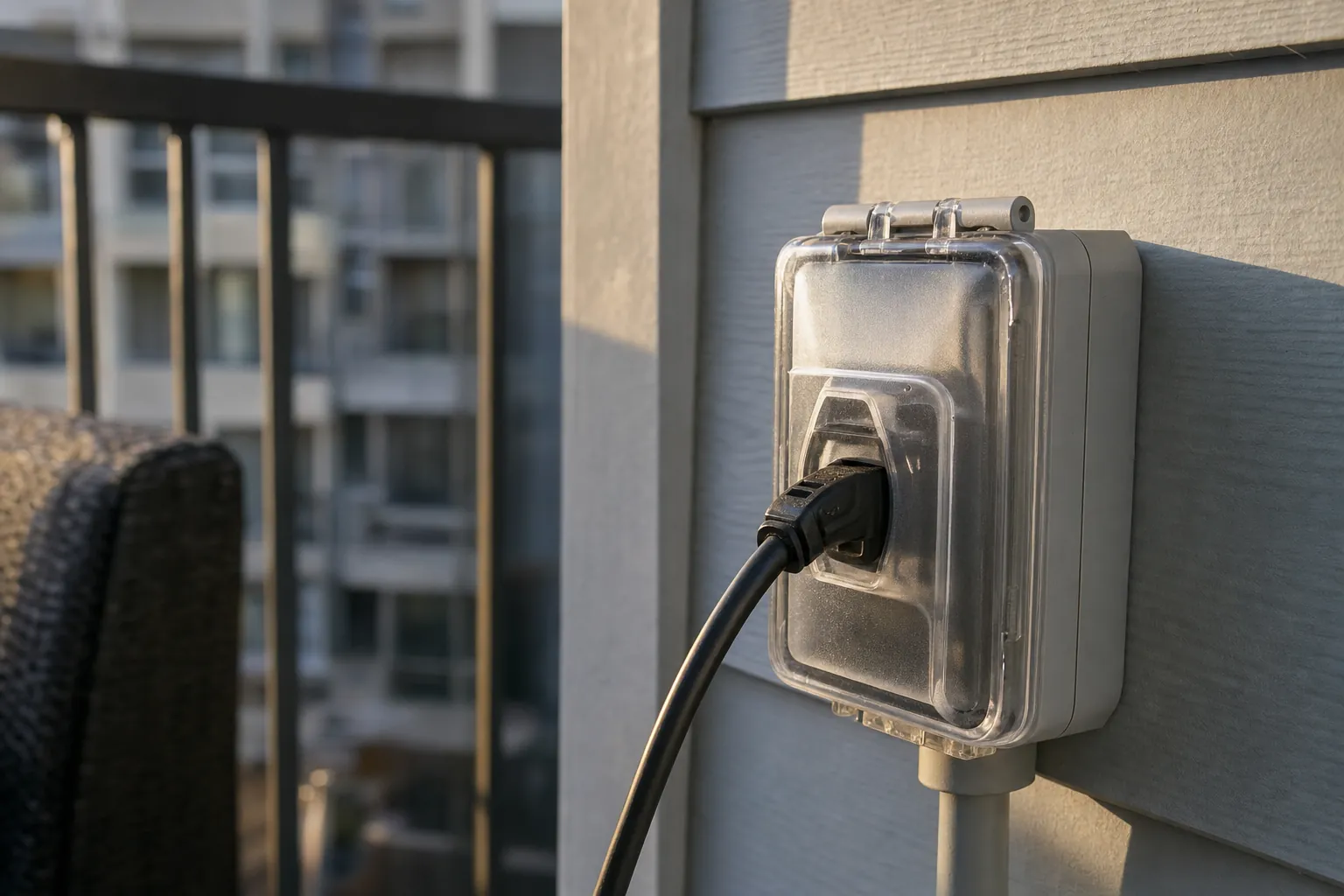
- Hidden overloads. Household circuits are built for power flowing one way, from the breaker panel out to your devices. A plug-in system adds a second source partway down the circuit. The combined current can exceed what the wire is rated for without tripping the breaker. LBNL calls this "breaker masking."
- Touch safety. The prongs on a plug that is feeding power can be live. UL notes that the grid-interactive inverters used in these systems are not evaluated for user contact safety, and that accessible plug blades can be energized when the panel is in sunlight.
- GFCI protection. Ground-fault outlets, which are required in outdoor and wet locations, assume power flows one way. UL says backfeed can potentially "blind" them.
UL 3700 was written to address these risks. Its scope says it applies only where every component on the circuit, including receptacles, GFCIs and breakers, is "listed and identified for bidirectional current flow." Read our UL 3700 explainer for what that means for your outlet.
What you can do:
- Buy certified equipment. Look for certification by a nationally recognized testing laboratory, and check the listing in the lab's own directory. The explainer shows how.
- Follow the manufacturer's instructions for which outlet and circuit to use. Don't put two kits on one circuit unless the maker says that is allowed. Each source you add to a circuit adds to the overload the breaker can't see.
- Don't run the cord through a window or wall. LBNL points out that NEC 400.12 prohibits flexible cords run through windows or walls or attached to the building.
- Don't modify the plug or use adapters the maker didn't supply. In Germany, LBNL reports, the only safety incidents reported involved tampering.
We haven't bench-tested any kit. We compare certification, specs and documentation, and we say so on every kit page.
Renters vs owners
Renters have the most to gain from plug-in solar and the most permissions to get. Your lease governs what you attach to the railing and the wall. LBNL notes that if a permit is needed, getting one requires the landlord's permission. Some state laws address landlords directly and some don't; your state page says which. Start with our renter mounting guide, which includes what to ask your building.
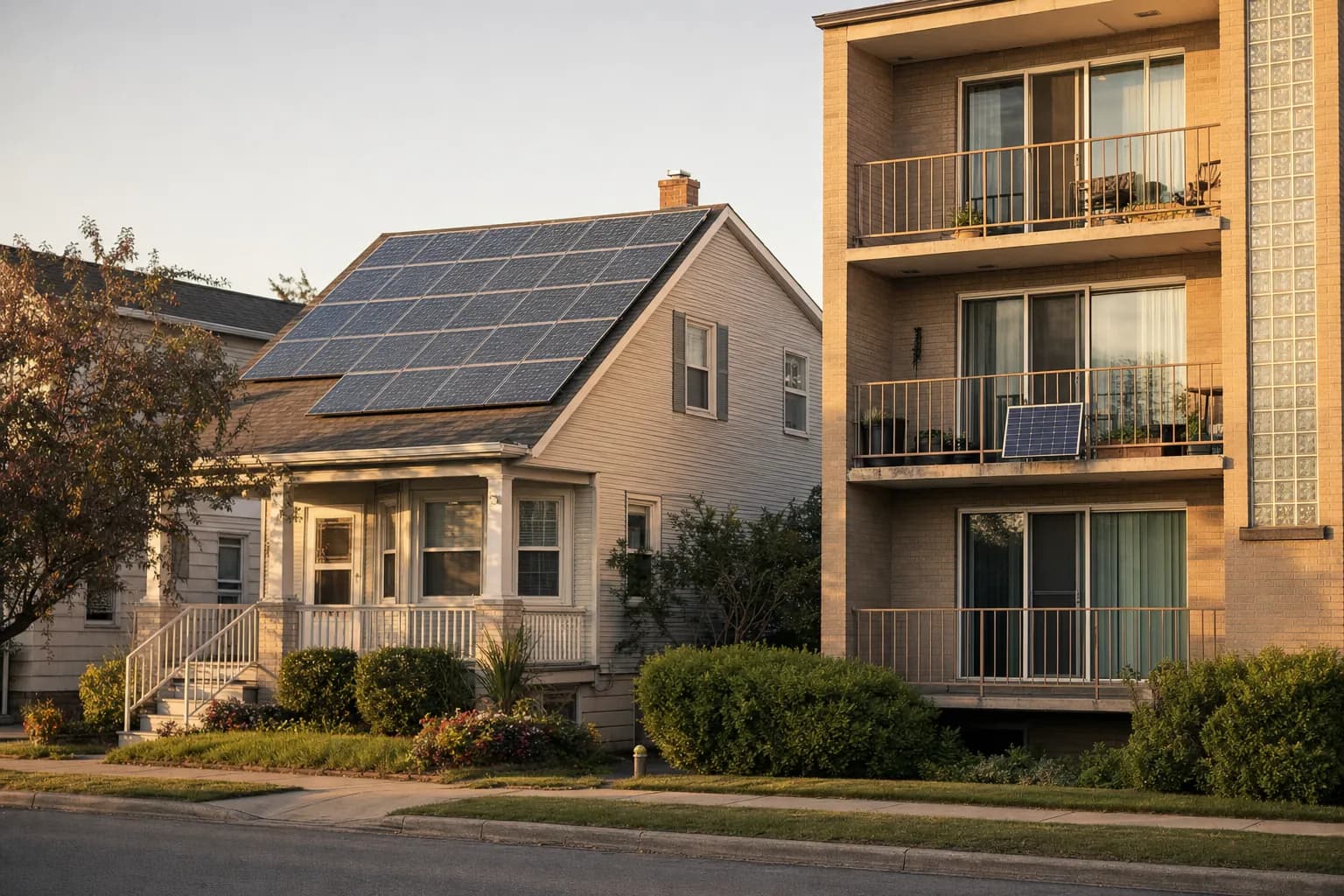
Owners of a house or condo have fewer permissions to get, but HOA rules still apply. An owner also has the rooftop option. If you have a good roof and plan to stay, rooftop solar will usually produce far more power. If your roof is shaded, too small, due for replacement, or off-limits, plug-in may be the only realistic option.
How to decide
Work through these in order:
- Is it allowed where you live? Check your state page. If your state hasn't addressed it, your utility's rules and local code are what apply.
- Can you mount it? Look for a south-, east- or west-facing spot with little shade and a clear right to use it (lease, HOA, condo rules).
- Is there a suitable outlet? It should be close to the panel, and on a circuit the manufacturer's instructions allow.
- Does the math work? Put your rate and facing into the calculator.
- Is the product certified? Check it in the lab's directory yourself instead of trusting a badge on a product page.
If all five come back yes, a plug-in kit is a reasonable, low-commitment way to cut part of your bill. If the first one comes back no, keep an eye on your state's page. Each one shows when it was last checked and lists any bill that's moving.
Sources
- Barriers to Balcony Solar and Plug-In Distributed Energy Resources in the United States (Gerber et al., Lawrence Berkeley National Laboratory, Energies 2025)osti.gov
- UL 3700 Outline of Investigation for Interactive Plug-In PV (PIPV) Equipment and Systems, Edition 1 (UL Standards & Engagement store listing)shopulstandards.com
- UL Solutions Debuts Testing and Certification Framework for Safer Plug-In Solar Across the United States (UL Solutions, Jan 8, 2026)ul.com
- Safety Considerations for Plug-In Photovoltaic (PIPV) Systems for Residential Use (UL Solutions, IAEI Magazine, July 1, 2026)iaeimagazine.org
- The Coordination Between Model Codes and Standards: 2026 National Electrical Code (UL Solutions, The Code Authority)ul.com
- FAQs for modification of sections 25C, 25D ... under Public Law 119-21 (IRS)irs.gov
- Electric Power Monthly, Table 5.6.A: Average Price of Electricity to Ultimate Customers by State (EIA)eia.gov
- Balcony Solar Kits (Bright Saver product page, for its own prices and specs)brightsaver.org
Questions
What is plug-in solar?
A small solar setup, usually one to a few panels and an inverter, that feeds power into your home through a plug and an outlet instead of being wired in by an electrician. Lawrence Berkeley National Laboratory researchers define plug-in energy resources by exactly that: they backfeed power into the home through an AC plug.
Will a plug-in solar kit keep my power on during a blackout?
A grid-tied plug-in inverter will not. Inverters certified to UL 1741 must stop feeding the circuit when the grid goes down (anti-islanding), which protects utility line workers. If a kit has a battery with its own outlet, check its spec sheet for whether that outlet works during an outage.
Can I claim the federal solar tax credit for a plug-in kit?
Not for anything installed in 2026. The IRS says the Residential Clean Energy Credit (section 25D) is not allowed for expenditures made after December 31, 2025, and an expenditure counts as made when installation is completed.
Is plug-in solar legal in my state?
It depends on the state, and the rules have changed quickly since 2025. Our state pages give the status for all 50 states and DC, each with a link to the official source and the date we last checked it.
What does UL 3700 have to do with plug-in solar?
UL 3700 is UL Solutions' Outline of Investigation for Interactive Plug-In PV Equipment and Systems, published December 11, 2025. It was written specifically for plug-in systems, and UL Solutions launched a certification program based on it on January 8, 2026.