Plug-In Solar Safety: UL 3700 Explained
What UL 3700 is, who wrote it and when, what it covers, how it differs from UL 1741, and how to check whether a plug-in solar product is actually listed.

UL 3700 is the safety document UL wrote specifically for plug-in solar. It was published on December 11, 2025, and certification against it opened in January 2026. A product only counts as certified if a recognized lab lists it, so check the lab's directory, not the box.
What UL 3700 is
The full name is the Outline of Investigation for Interactive Plug-In PV (PIPV) Equipment and Systems. Edition 1 carries a published date of December 11, 2025, according to the UL Standards & Engagement store listing. On January 8, 2026, UL Solutions announced a testing and certification program for plug-in solar based on it.
UL 3700 is an outline, not a standard. UL Standards & Engagement defines Outlines of Investigation as "certification documents developed whose content and copyright are owned by UL LLC," and says they "are not consensus documents and are not developed through the standards development process administered by UL Standards."
Lawrence Berkeley National Laboratory (LBNL) researchers describe how this usually works. UL Solutions writes an outline to give interim requirements for a new kind of product that has no standard yet. As the product category matures, the outline can become a full consensus standard published by UL Standards & Engagement. That's a normal path for new technology, and it means the requirements may change between editions.
You'll see some sources say UL Standards & Engagement "issued" UL 3700, and others credit UL Solutions. The store listing is the clearest record: it sells the document as a "UL LLC Outline."
What it covers
The outline's published scope says:
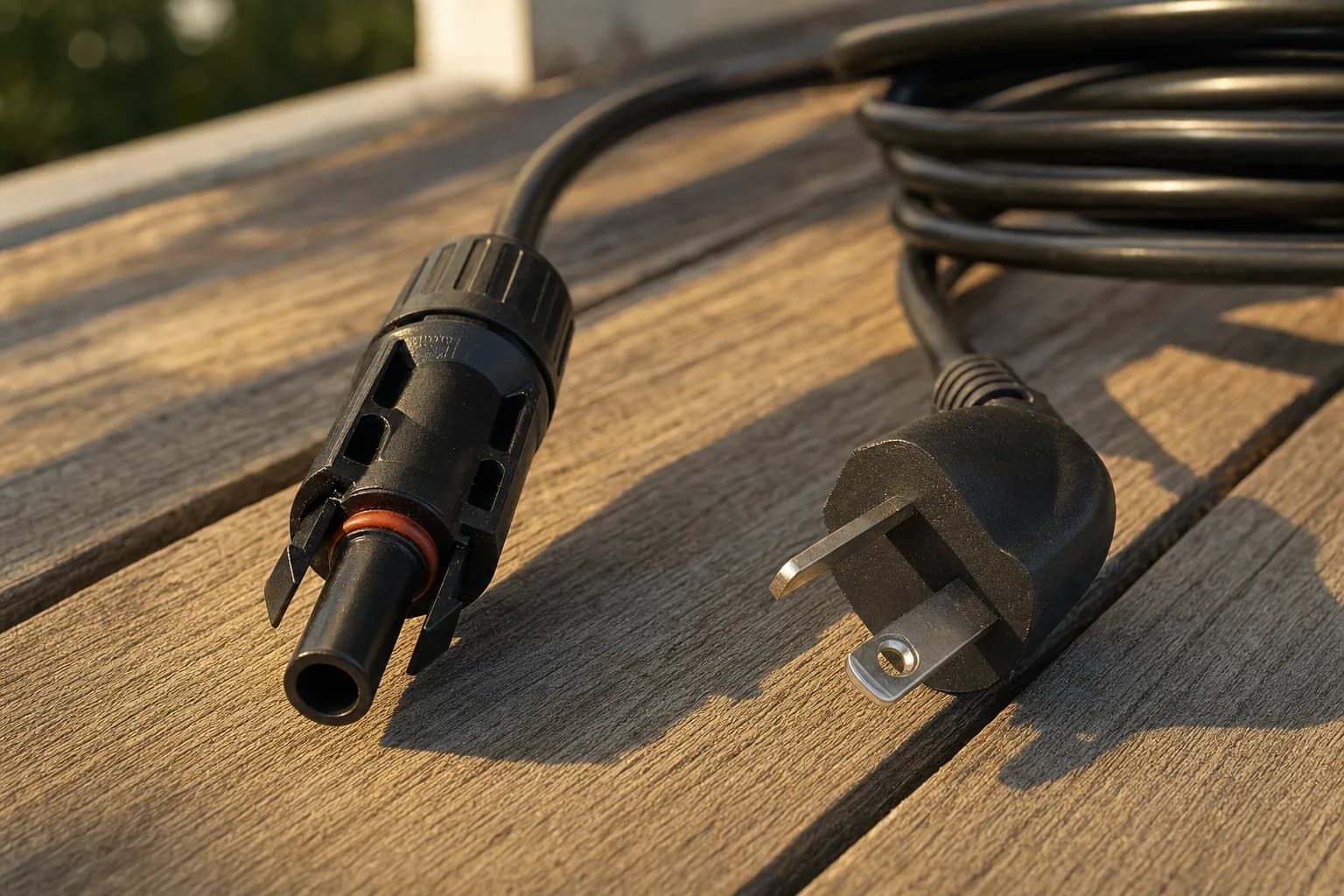
- It applies to plug-in PV equipment and systems "that generate power and have an AC or DC PIPV interconnection cord with a PIPV plug used for connection to a permanently installed PIPV receptacle."
- Covered equipment "can be interconnected with other plug-in equipment to form a PIPV System," and "may be movable."
- It is limited to panels and DC circuits with a maximum open-circuit voltage of 64 V DC (80 V DC after a cold-temperature factor).
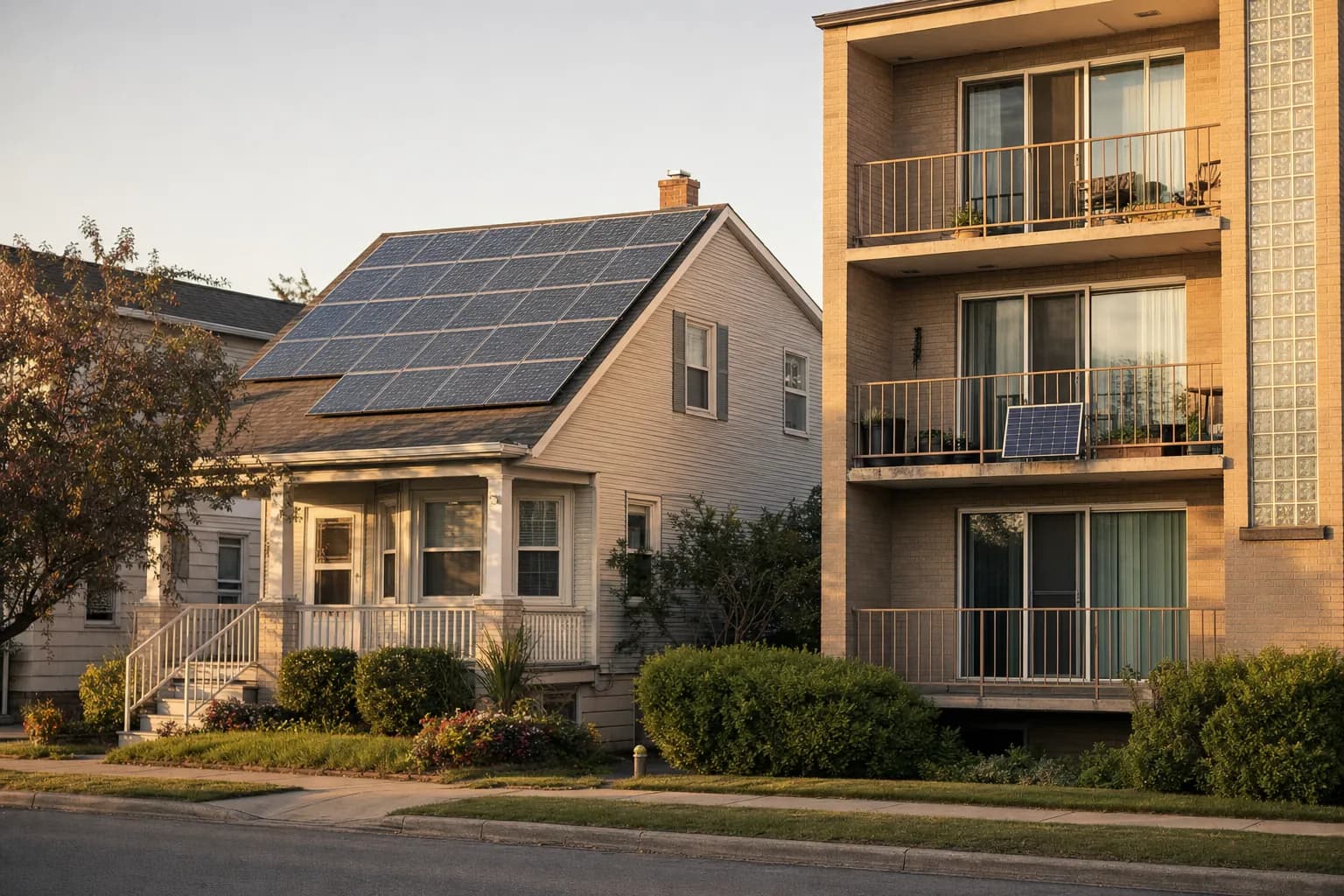
- It excludes roof-mounted PV, building-integrated PV, and anything permanently wired into your home's electrical system. Those fall under local building codes such as the National Electrical Code.
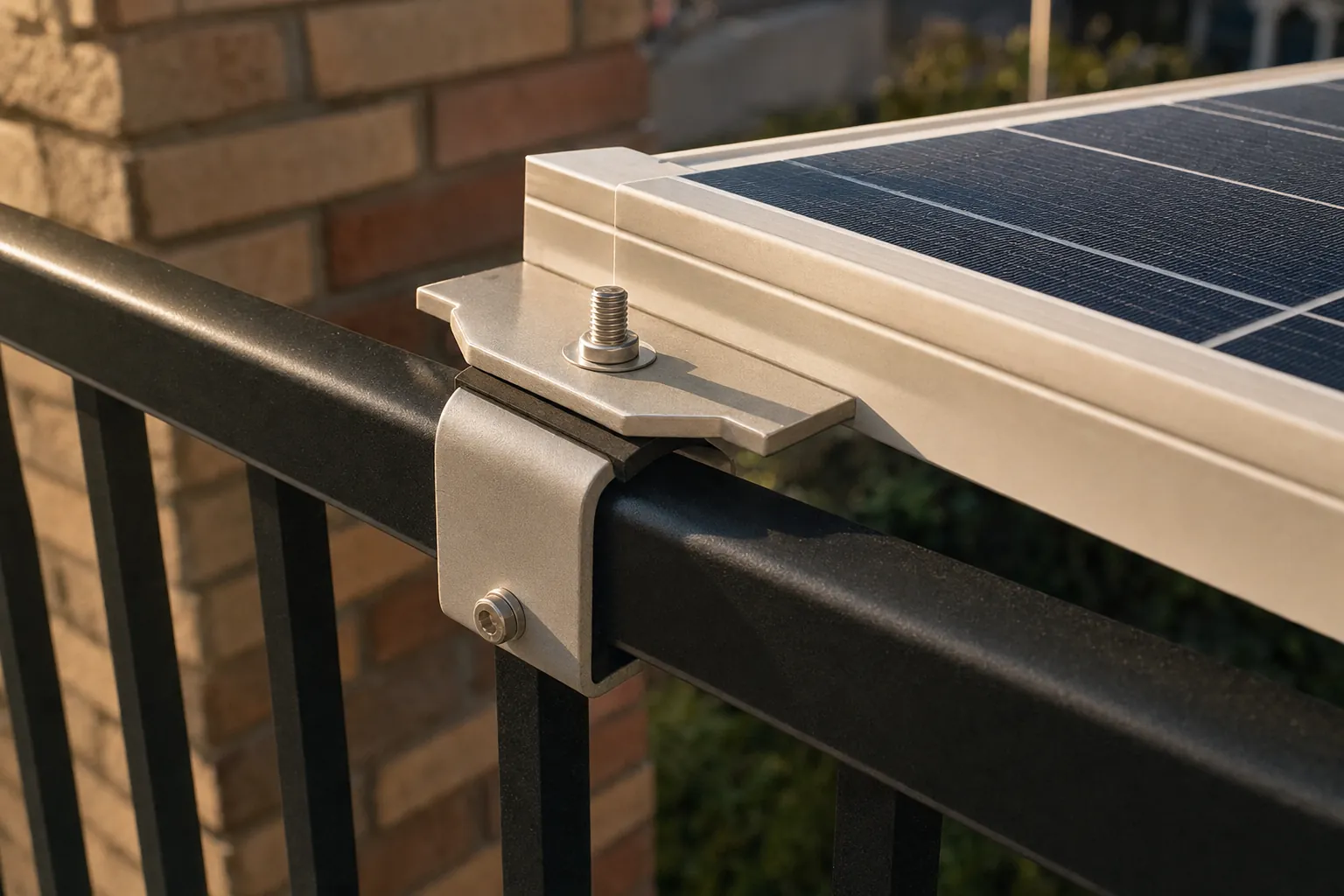
- It covers the manufacturer's instructions for securing equipment against wind, snow, seismic forces and gravity under the building codes. It says it "does not evaluate or verify the structural integrity or load-bearing capacity of the building components themselves, such as balcony railings."
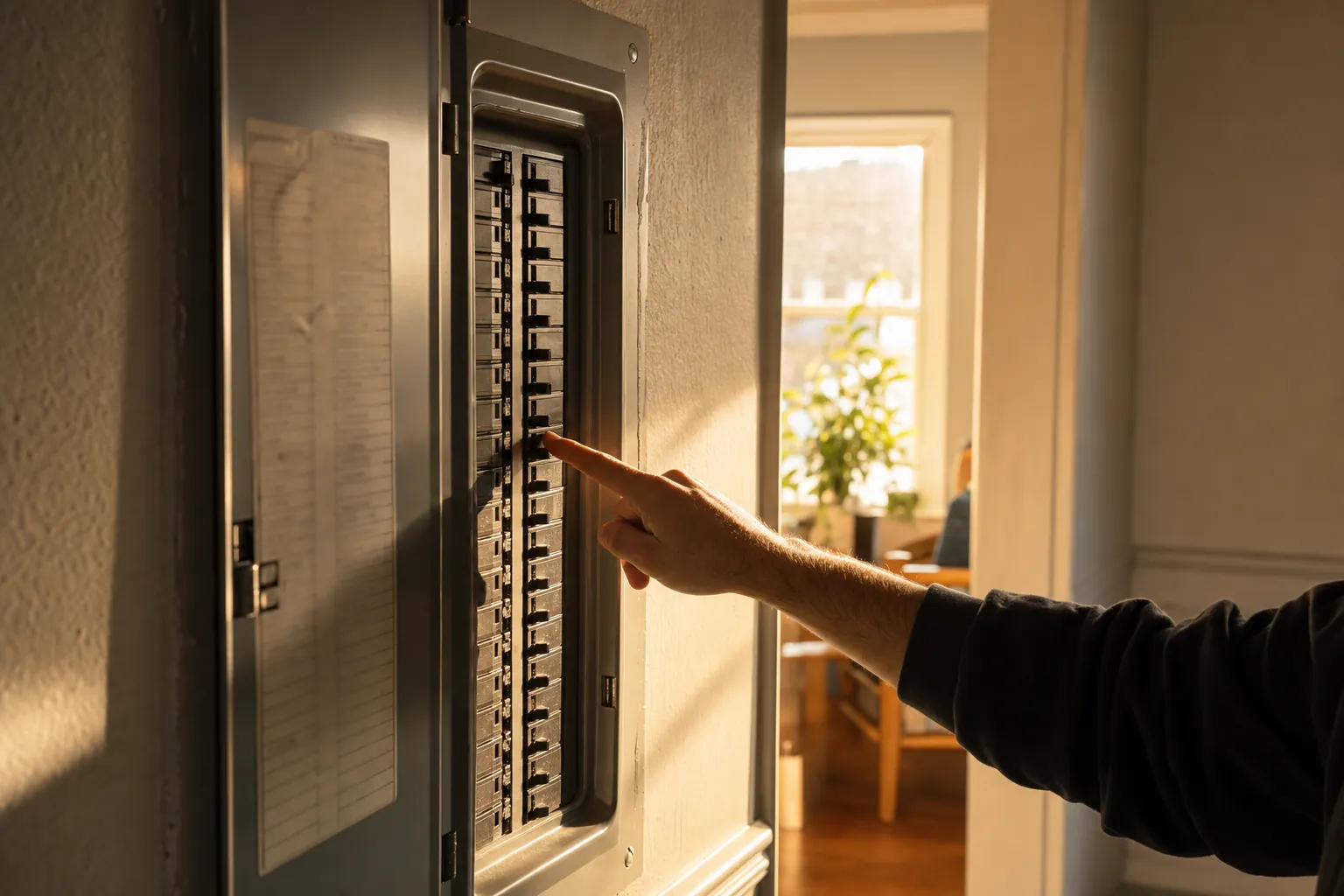
- It applies only where every component on the circuit, "including connectors, receptacles, circuit interrupter devices (e.g., GFCI), and overcurrent devices," is "listed and identified for bidirectional current flow" and installed under the National Electrical Code.
For renters, this means a UL 3700 listing covers the product. It does not certify the outlet, breaker or GFCI in your apartment. The scope assumes those are suitable for power flowing in both directions.
UL 3700 references 32 other standards. They include UL 1741 (inverters), UL 943 (GFCIs), UL 498 (plugs and receptacles), UL 2703 (PV mounting and clamping devices), and UL 1973 (batteries).
The risks it responds to
UL Solutions published a white paper alongside the outline. In a July 2026 column, UL Solutions summarized three risks:
- Overcurrent. Home circuits are designed for power flowing one way. When a plug-in system backfeeds the same circuit, "the combined current from the utility and PIPV source can exceed conductor ratings without tripping the circuit breaker."
- Touch safety. "Accessible plug blades can become energized when PV is exposed to sunlight."
- GFCI compatibility. Current GFCI standards assume one-way current, and plug-in backfeed can potentially leave circuits unprotected.
The white paper lists possible fixes: dedicated circuits with unique receptacles, overcurrent protection at the point of connection, proprietary plugs, power control systems that monitor and limit output, and bidirectional GFCIs. These are proposed approaches, and the column doesn't say which ones UL 3700 requires.
How it differs from UL 1741
UL 1741 is a consensus standard covering "inverters, converters, charge controllers, and interconnection system equipment" for stand-alone or grid-connected systems. It works together with IEEE 1547, the grid interconnection standard. Its scope says covered products "are intended to be installed in accordance with the National Electrical Code."
A UL 1741 inverter has been tested for grid behavior, including anti-islanding: it shuts off when the grid goes down. LBNL notes the limits of that for plug-in use. The allowed shutdown time protects line workers but may be too slow to protect someone touching an unplugged prong. And anti-islanding does nothing about breaker masking or GFCI backfeed, which LBNL lists as separate problems.
UL 3700 looks at the plug-in product as equipment you connect yourself. It references UL 1741 rather than replacing it. Seeing "UL 1741 certified" on a plug-in kit tells you the inverter was tested as an inverter. It doesn't tell you the kit was evaluated as a plug-in system.
How to check whether a product is listed
1. Find out which lab certified it. OSHA recognizes private labs as Nationally Recognized Testing Laboratories (NRTLs) to certify products to safety standards. UL is one of them. OSHA's current list also includes CSA Group, Intertek, TÜV Rheinland, TÜV SÜD, SGS and others. Each NRTL uses its own registered certification mark, according to OSHA. Other labs can certify products to UL-numbered documents. APsystems, for example, says its EZ1 microinverter is "CSA Certified to UL3700 standards."
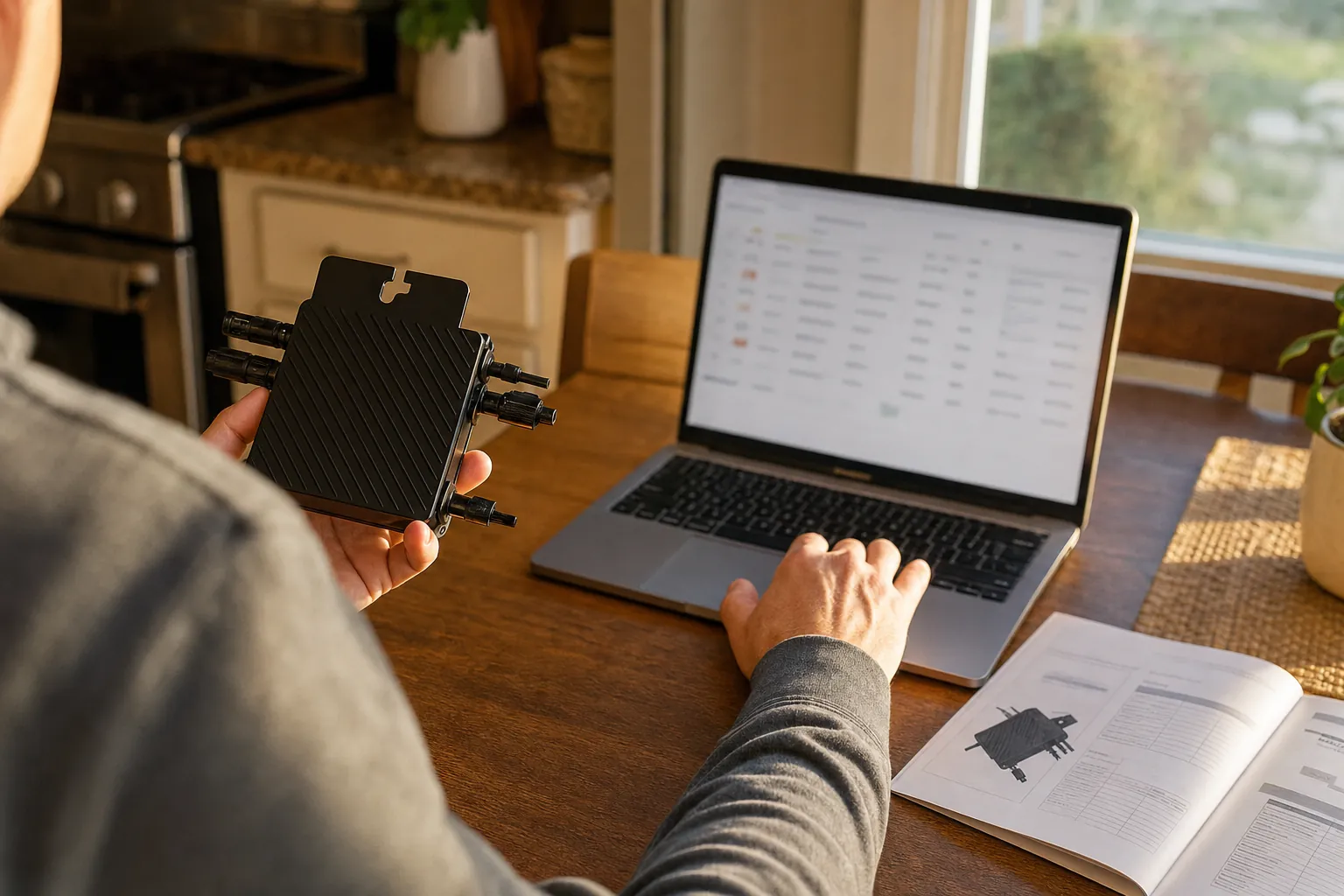
2. For UL Solutions certifications, search Product iQ. UL Solutions says it lists these products under the category "Plug-In Photovoltaic – PIPV – Equipment and Systems (ODCZ)." Go to Product iQ, make the free account, and enter ODCZ in the search field. You can also search by company name, model number, or UL file number.
3. For other labs, use that lab's certification directory and search for the exact model number.
4. Match the model exactly. A listing covers specific model numbers. Check whether it covers the microinverter alone or a complete system with panels, cord and mounting, and whether the other parts in your kit are named.
5. Read the wording. "Certified" or "listed," with a lab named, is a checkable claim. "Compliant," "designed to meet," or "pending" are claims you can't look up in a directory. Hoymiles, for example, described its HiFlow Pro microinverter in July 2026 as "the first UL 3700-compliant plug-in microinverter in the US," without naming a lab on that page.
Where certification stands
By mid-2026, microinverter makers had begun announcing UL 3700 compliance or certification. We have not yet confirmed any of these listings in a certification directory ourselves.
State laws treat UL 3700 differently. Some name it, some name UL 1741, and some only require certification by a recognized lab. Your state page quotes the exact requirement. For the wider picture, see the plug-in solar guide.
Sources
- UL 3700 Outline of Investigation for Interactive Plug-In PV (PIPV) Equipment and Systems, Edition 1 (UL Standards & Engagement store listing, scope and referenced standards)shopulstandards.com
- Product Glossary: Outline of Investigation (UL Standards & Engagement)shopulstandards.com
- UL 1741, Edition 3: Inverters, Converters, Controllers and Interconnection System Equipment for Use With Distributed Energy Resources (UL Standards & Engagement)shopulstandards.com
- UL Solutions Debuts Testing and Certification Framework for Safer Plug-In Solar Across the United States (UL Solutions, Jan 8, 2026)ul.com
- Safety Considerations for Plug-In Photovoltaic (PIPV) Systems for Residential Use (UL Solutions, IAEI Magazine, July 1, 2026)iaeimagazine.org
- Safety Considerations for Plug-In Photovoltaic (PIPV) Systems (UL Solutions)ul.com
- Finding UL Listed and Certified Products with UL Product iQ (UL Solutions, The Code Authority)ul.com
- Current List of NRTLs (OSHA)osha.gov
- OSHA's Nationally Recognized Testing Laboratory (NRTL) Programosha.gov
- Barriers to Balcony Solar and Plug-In Distributed Energy Resources in the United States (Gerber et al., Lawrence Berkeley National Laboratory, Energies 2025)osti.gov
- Hoymiles introduces HiFlow Pro (Hoymiles product release, for its own product claim)hoymiles.com
- EZ1. Proven. Portable Solar. UL 3700. (APsystems USA, for its own product claim)usa.apsystems.com
Questions
What is UL 3700?
UL 3700 is the Outline of Investigation for Interactive Plug-In PV (PIPV) Equipment and Systems. Edition 1 was published on December 11, 2025, and UL Solutions launched a certification program based on it on January 8, 2026.
Is UL 3700 a consensus standard?
No. It is an Outline of Investigation, which UL Standards & Engagement defines as a certification document owned by UL LLC that is not developed through its consensus standards process. An outline can later become a full consensus standard.
How is UL 3700 different from UL 1741?
UL 1741 is the consensus standard for inverters and other equipment that connects distributed energy to the grid, and it assumes installation under the National Electrical Code. UL 3700 covers plug-in PV equipment and systems that connect through a cord and plug, and it references UL 1741 among 32 other standards.
How do I check whether a product is UL 3700 certified?
For UL Solutions certifications, search UL Product iQ for the category code ODCZ (Plug-In Photovoltaic – PIPV – Equipment and Systems), as UL Solutions itself directs. Other nationally recognized testing laboratories can also certify to UL standards, so if a product names a different lab, check that lab's directory.
Does a UL 3700 listing mean my balcony railing can hold the panel?
No. The outline's scope says it does not evaluate the structural integrity or load-bearing capacity of building components such as balcony railings.