Plug-In Solar for Renters: No-Drill Mounting Guide
Mounting plug-in solar without drilling: railing clamps, freestanding stands, wind and weight, and what to ask your landlord and building.
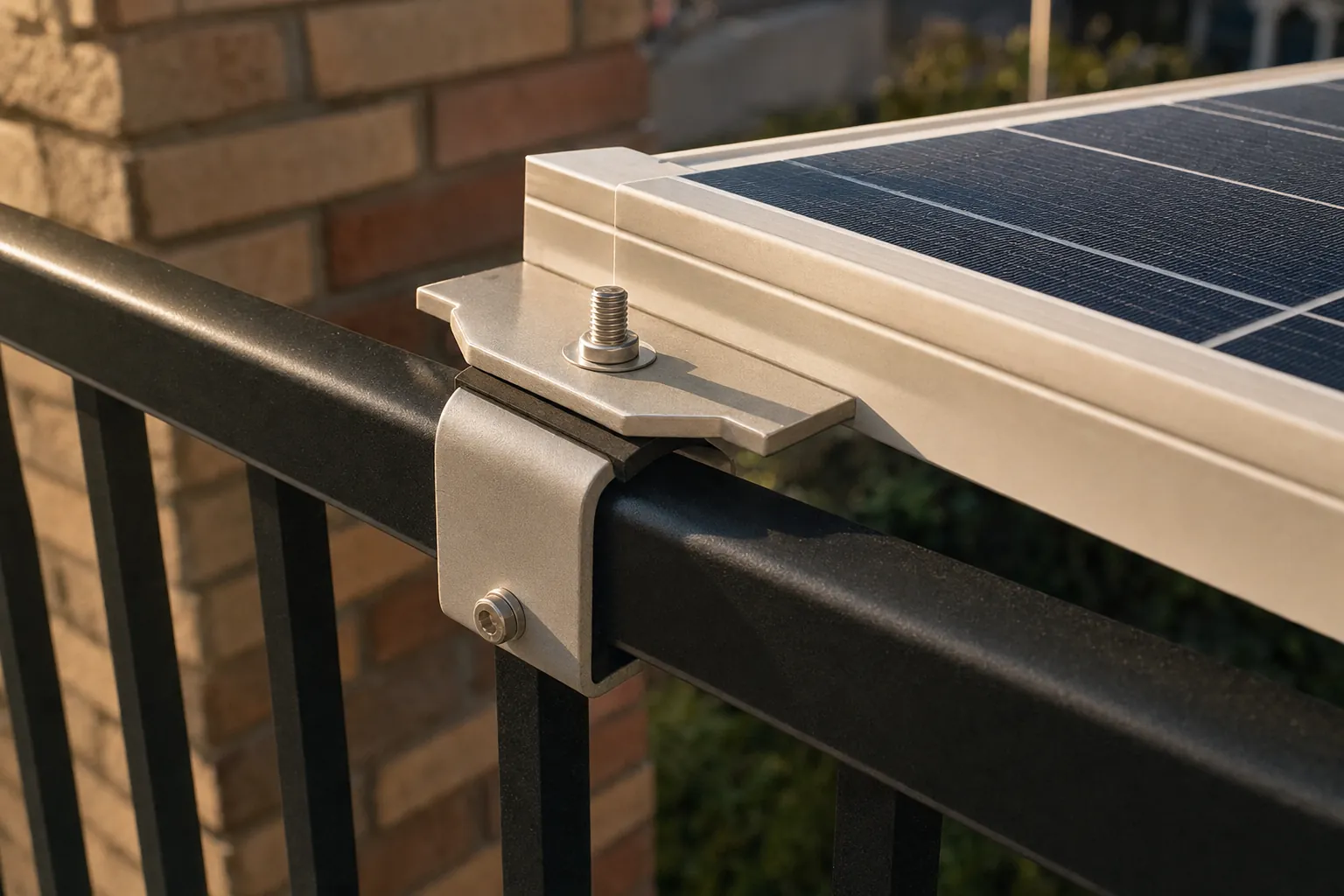
Most renters mount plug-in solar with railing clamps or a freestanding stand, so nothing gets drilled. Before you buy, get three things settled: permission under your lease, a railing or floor that can take the load, and a usable outdoor outlet.
Your mounting options
Railing clamps
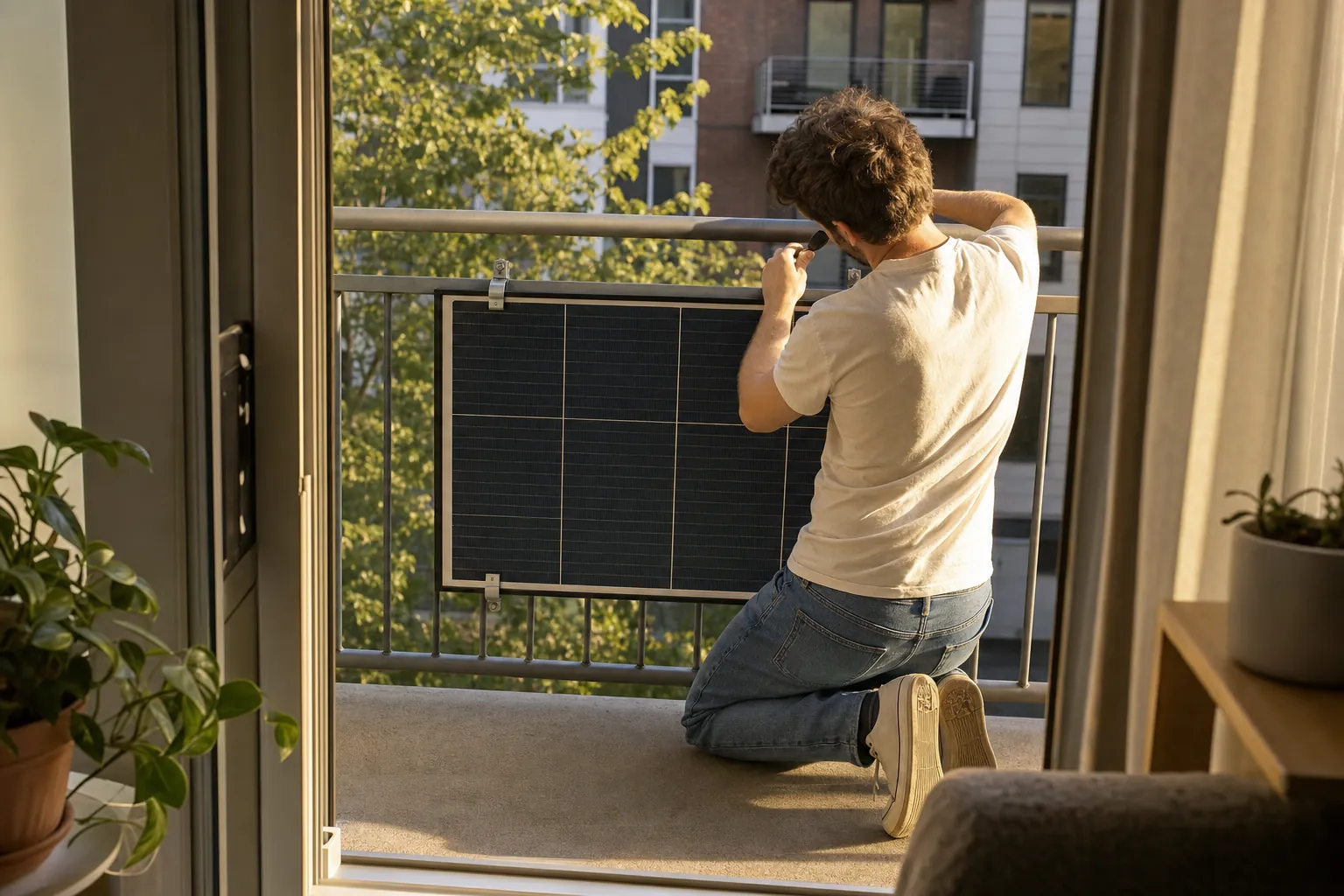
Clamp brackets grip the balcony railing and hold the panel against it, usually vertically or tipped slightly out. Nothing is drilled, and the clamps come off when you move.
A solid steel or aluminum railing is a different job from a glass panel, a thin wood rail, or a railing that already flexes when you lean on it.
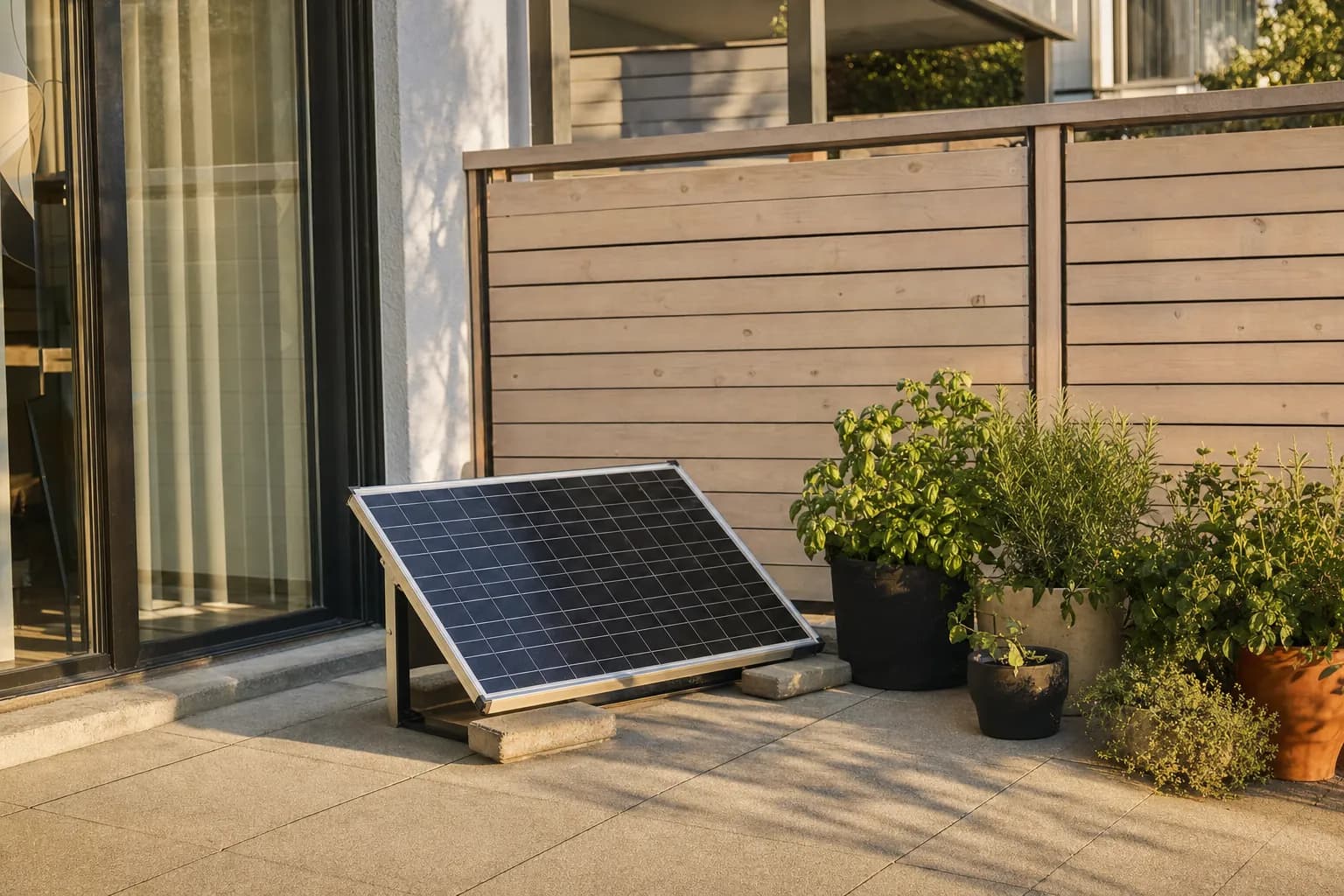
Freestanding and patio mounts
A frame or angled stand sits on the balcony floor, patio, or ground, held down by weight rather than bolts. It can tilt the panel toward the sun and doesn't load the railing. It does take floor space, and the ballast adds weight. On a balcony, a panel standing behind a solid railing may also be shaded by the railing itself.
Leaning or hanging
Some people lean a panel against a wall or hang it off a railing with straps. If the kit's instructions don't show that method, don't use it. A panel is a large, flat surface, and loose mounting is how panels move in wind.
Weight and wind
As one example, Bright Saver lists its 180 W panel at 46 by 34 inches and 11 pounds. The weight is manageable, but a panel that size catches a lot of wind and pulls on whatever holds it.
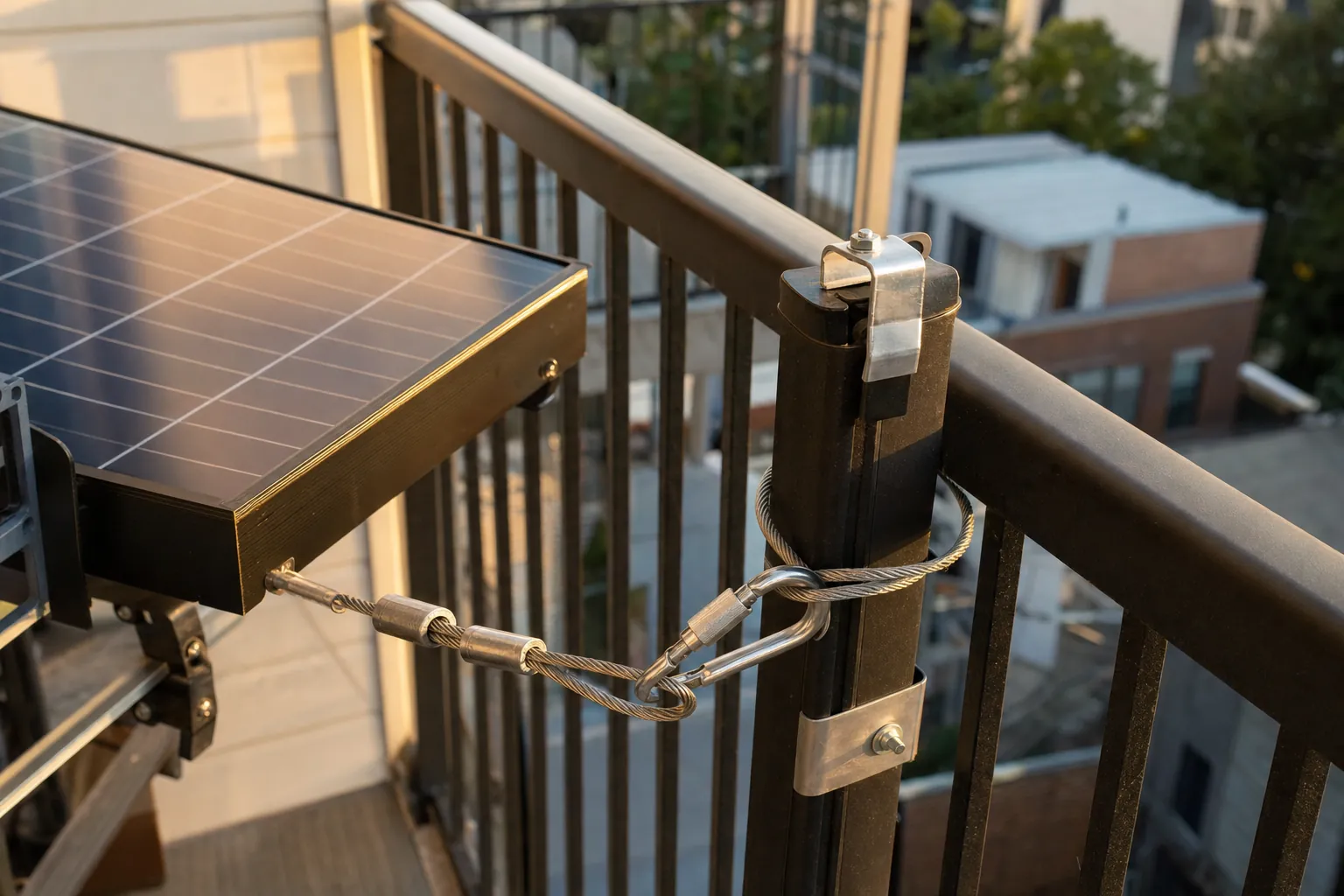
UL 3700 covers part of this. The outline covers manufacturers' installation instructions for securing equipment against "wind, snow, seismic forces, and gravity" under the building codes. It also says it "does not evaluate or verify the structural integrity or load-bearing capacity of the building components themselves, such as balcony railings."
In practice:
- Use the mounting hardware the kit maker specifies, installed the way the instructions show. UL 3700 references UL 2703, the standard for PV mounting and clamping devices, so ask whether the mounts carry a listing.
- Check the kit's stated wind and railing limits against your situation. If you're on a high floor or an exposed corner, ask the maker whether the mount is rated for that.
- Think about what's below. If the panel or a clamp fails over a sidewalk, parking area or someone else's balcony, someone can get hurt. Ask whether your building allows anything mounted on the outside of the railing.
- Recheck the clamps after the first storm and periodically after that.
The outlet and the cord
The panel's cord has to reach an outlet the manufacturer's instructions allow, without an extension cord unless the kit specifically provides one.
- Outdoor outlet. LBNL researchers note that the NEC requires GFCI protection for outdoor outlets (Article 210.8). UL Solutions warns that plug-in backfeed can compromise GFCI protection because GFCIs assume power flows one way. The UL 3700 scope applies only where circuit components, GFCIs included, are "listed and identified for bidirectional current flow." Ask the kit maker what your outlet needs to be.
- No cords through windows or doors. Lawrence Berkeley National Laboratory researchers note that NEC 400.12 prohibits flexible cords running through windows or walls or attached to the building.
- One kit per circuit unless the instructions say otherwise. Adding sources to one circuit raises the risk of an overload the breaker can't see (see our UL 3700 explainer).
The landlord conversation
Your lease is the first rulebook. Look for anything about attaching things to the exterior, balconies, or railings, and read that clause before you talk to anyone.
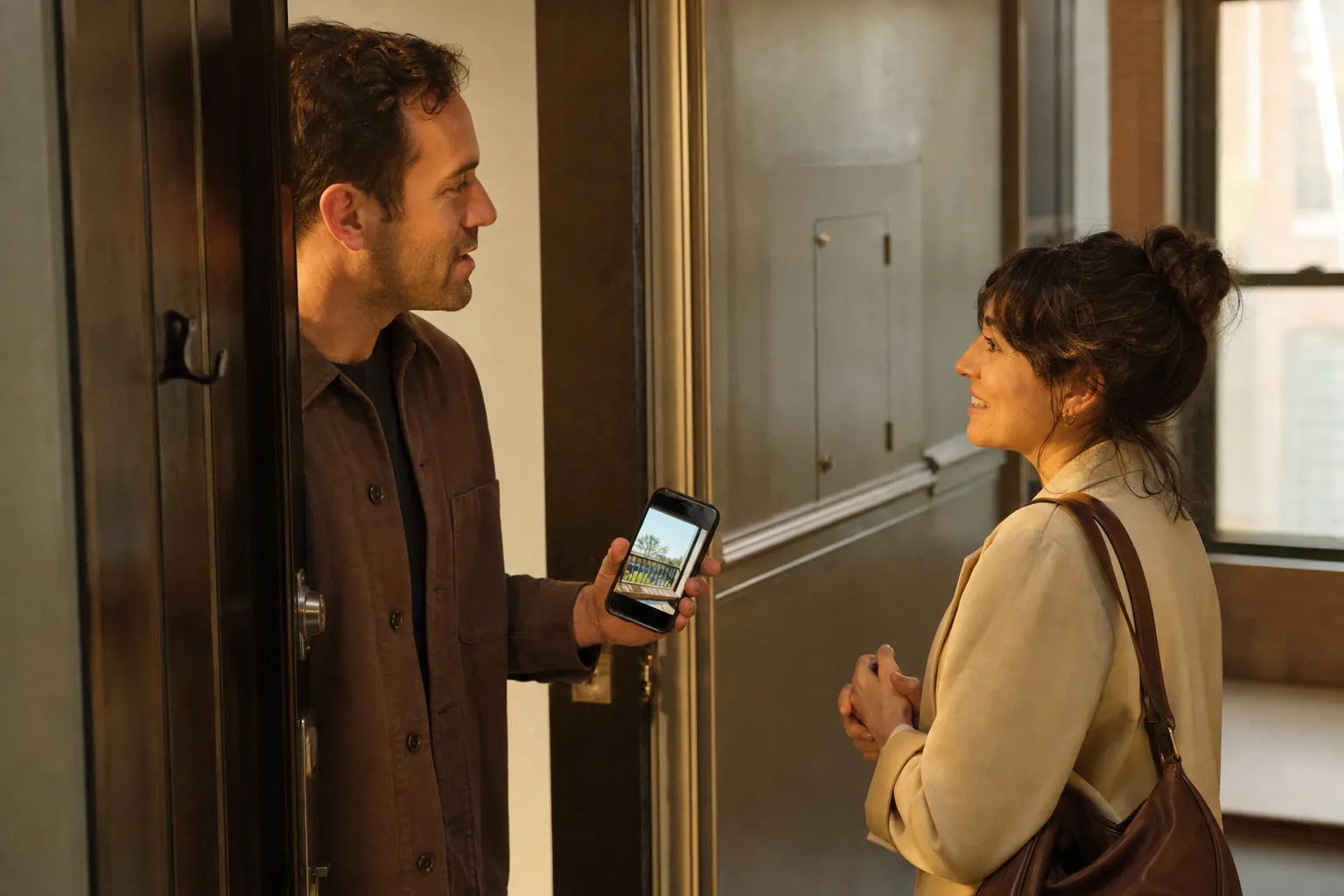
Some state plug-in solar laws address landlords and HOAs directly, and some say nothing about them. Your state page says what your state's law covers. Where it's silent, assume your lease still applies. LBNL researchers also note that if a permit turns out to be needed, getting one requires the landlord's permission.
Make the request easy to say yes to. Put it in writing and include:
- the kit's make, model and wattage, with a spec sheet
- how it mounts (clamps or stand, no drilling) and a photo or drawing of where
- which outlet it plugs into
- which lab certified it, with the listing, if it's certified
- that you'll remove it when you move and repair anything you touch
A short email works:
"Hi, I'd like to put a small plug-in solar panel on my balcony. It mounts with clamps (no drilling) and plugs into the existing balcony outlet. I've attached the spec sheet and a photo of where it would go. I'll remove it when I move and repair anything it touches. Could you let me know if that's OK, or what you'd need from me?"
In states with a plug-in solar law, our state page has a version of this that cites the law.
What to check with your building
Ask building management or your landlord:
- Is the balcony outlet on its own circuit or shared with indoor rooms? You can't see this from the outlet, and it affects overload risk.
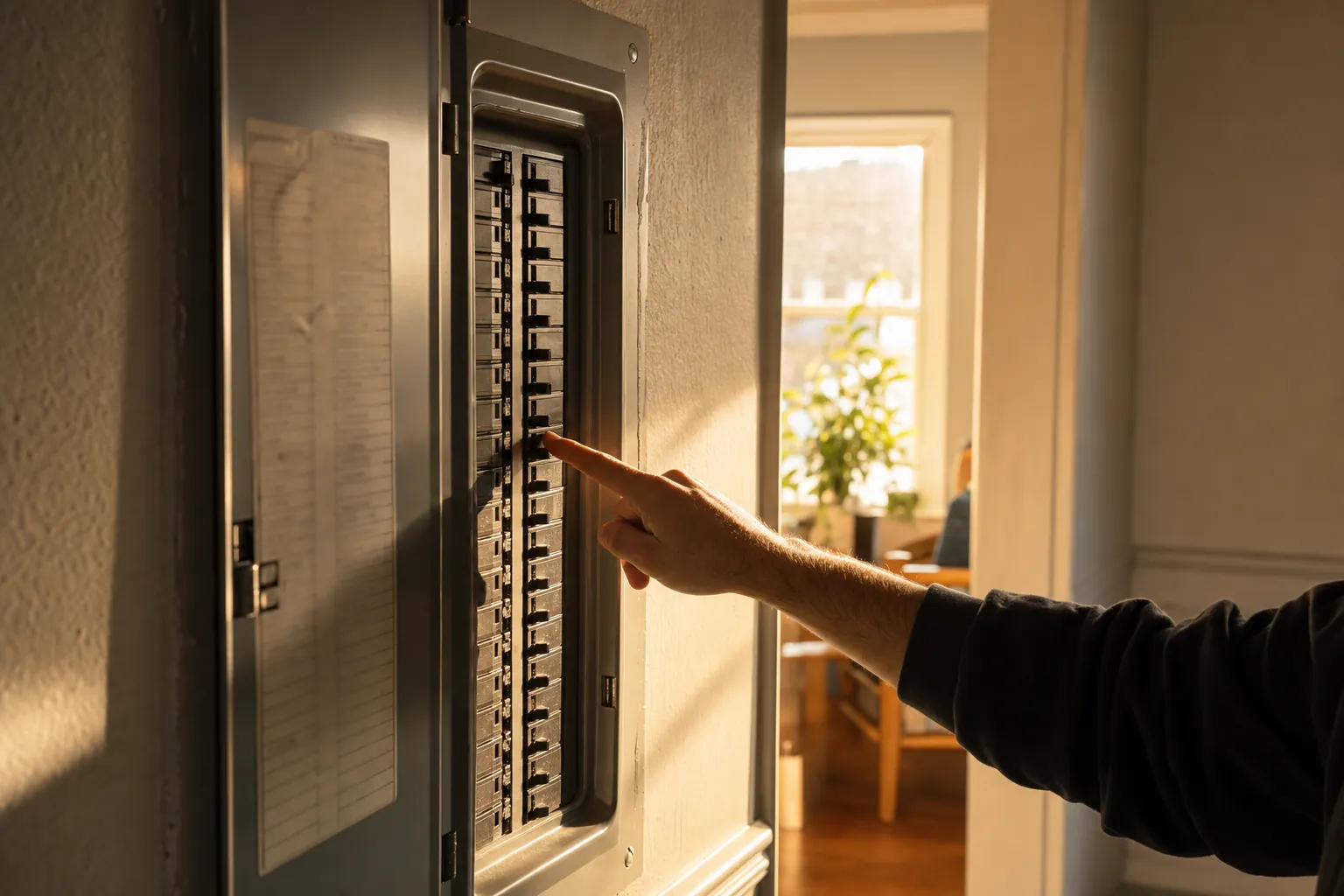
- Is the outlet GFCI-protected, and where is the reset? If it trips, you need to reach it.
- Are there rules about railing attachments or anything visible from outside? Condo and HOA rules can cover the look of the building too.
- Is there anything about the railing you should know? Glass panels, recent repairs, or known weak spots.
- Is there an insurance requirement? Check whether your renter's policy covers the kit and any damage it causes.
Before you buy
- Measure the railing (height, rail thickness and shape) and compare it to the clamp specs.
- Note which way the balcony faces and when it gets direct sun. Put that into the calculator to see whether the output is worth it.
- Confirm the outlet is within the cord's reach.
- Get the landlord's answer in writing.
For how plug-in solar works and what it can do, see the plug-in solar guide.
Sources
- UL 3700 Outline of Investigation for Interactive Plug-In PV (PIPV) Equipment and Systems, Edition 1 (UL Standards & Engagement store listing)shopulstandards.com
- Barriers to Balcony Solar and Plug-In Distributed Energy Resources in the United States (Gerber et al., Lawrence Berkeley National Laboratory, Energies 2025)osti.gov
- Safety Considerations for Plug-In Photovoltaic (PIPV) Systems for Residential Use (UL Solutions, IAEI Magazine, July 1, 2026)iaeimagazine.org
- Balcony Solar Kits (Bright Saver product page, for its own prices and specs)brightsaver.org
Questions
Can I mount plug-in solar on a balcony without drilling?
Usually, with railing clamps or a freestanding stand. Whether you're allowed to depends on your lease and building rules, and whether it's safe depends on your railing and your exposure to wind.
Does a UL 3700 certification mean my railing is strong enough?
No. The UL 3700 outline covers the manufacturer's instructions for securing equipment against wind, snow, seismic forces and gravity, but says it does not evaluate the structural integrity or load-bearing capacity of building components such as balcony railings.
Do I need my landlord's permission?
Check your lease first for rules about attaching things to the building. Some state plug-in solar laws address landlords and some don't, so check your state page for what applies to you.
Can I run the cord through a window to an indoor outlet?
Don't. Lawrence Berkeley National Laboratory researchers note that NEC 400.12 prohibits flexible cords from running through windows or walls or being attached to the building. Use an outlet the manufacturer's instructions allow.