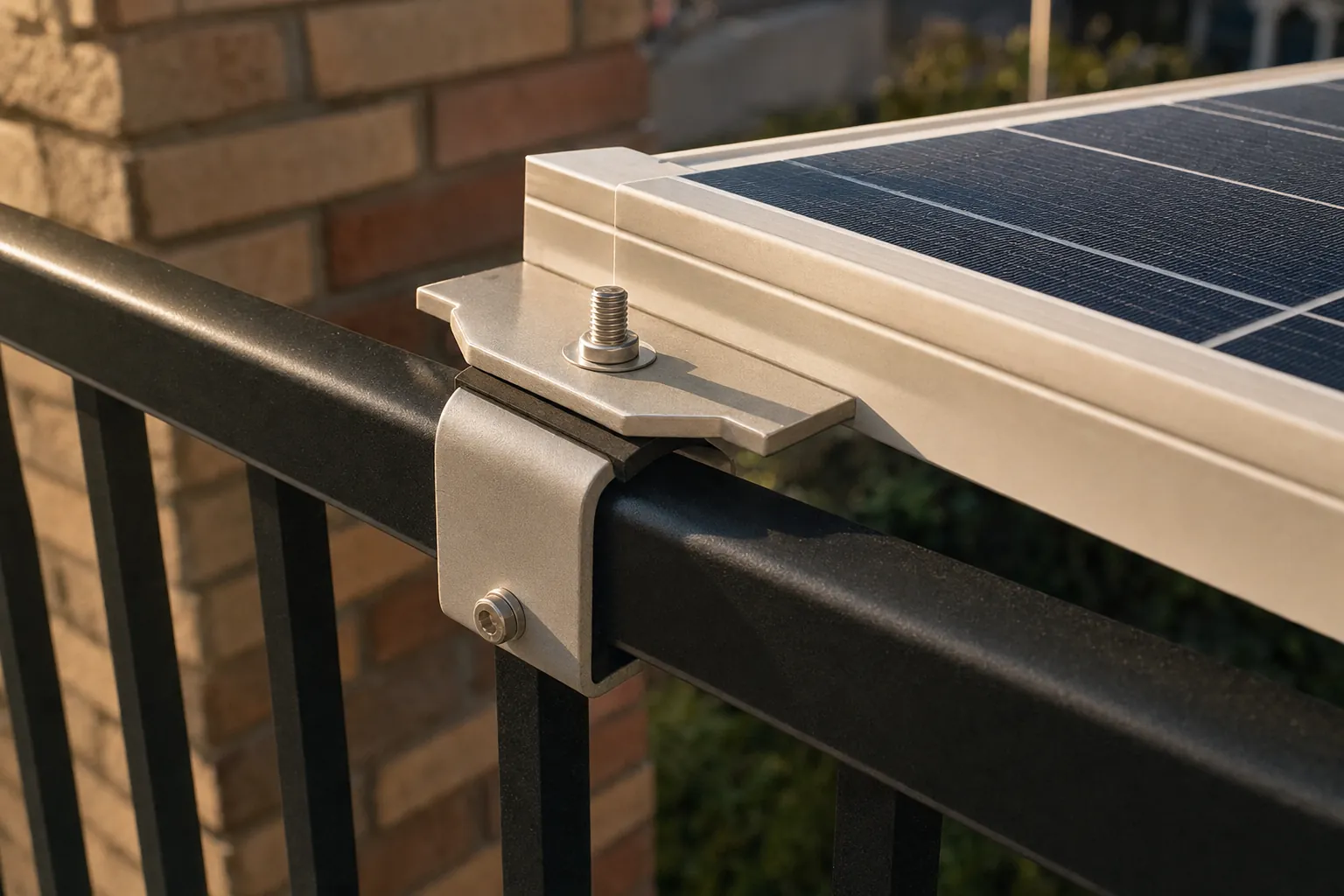
Plug-In Solar vs Rooftop Solar: Cost, Output and Permits
Plug-in solar costs far less and moves with you. Rooftop makes far more power but needs permits and a utility agreement. How they compare.
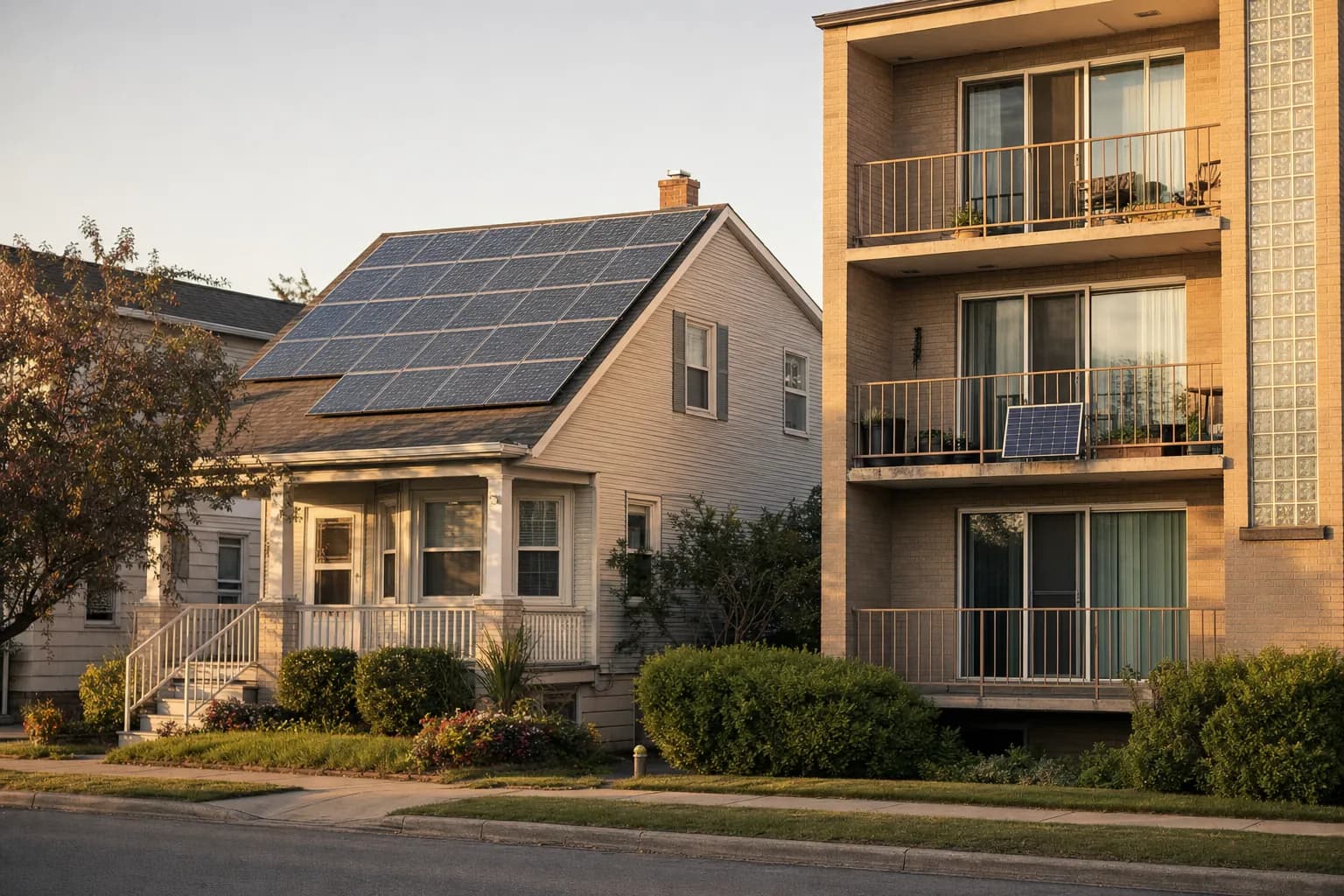
Rooftop solar makes far more power and can cover most of a home's electricity. It also costs tens of thousands of dollars and needs a permit and a utility agreement. Plug-in solar starts at a few hundred dollars, covers a small slice of your use, and moves with you.
Side by side
| Plug-in solar | Rooftop solar | |
|---|---|---|
| Typical size | A few hundred watts to a little over 1 kW | Median 7.4 kW (US, 2023) |
| Up-front cost | From a few hundred dollars | Tens of thousands of dollars |
| Who installs | You | A certified professional |
| Permit and utility agreement | Depends on your state | Usually both |
| Share of your bill | A small slice | Often most of it |
| Moves with you | Yes | No |
| Works for renters | Often, with permission | Rarely |
Cost
Rooftop solar is priced per watt. Lawrence Berkeley National Laboratory's Tracking the Sun report (2024 edition, covering systems installed through 2023) found the middle 60% of stand-alone residential systems cost $3.2 to $5.5 per watt. The median residential system was 7.4 kW, and most ran 5 to 11 kW. At those prices, a 7.4 kW system works out to roughly $24,000 to $41,000 before incentives. That's our arithmetic from LBNL's figures, not a quote.
Most of that price isn't hardware. LBNL researchers note that residential rooftop solar is now "largely driven by soft costs, including engineering, permitting, procurement, overhead, and profit," plus labor and electrical equipment. For smaller systems, they write, those costs can double the capital cost.
Plug-in kits avoid most of those costs because you install them yourself and there is no roof work. The kits are also much smaller. Bright Saver, a nonprofit seller, listed a 180 W one-panel kit at $285.30 and a 360 W two-panel kit at $414.17 (member prices) in September 2026. Larger kits and kits with batteries cost more. See our kit pages for checked prices.
The federal tax credit no longer applies to either. The IRS says the Residential Clean Energy Credit is not allowed for expenditures made after December 31, 2025. The expenditure counts as made when installation is completed.
Output
A rooftop system is sized to cover a large part of what a household uses in a year. A plug-in kit is a fraction of that size, and it goes wherever you have room, which is often not the sunniest angle. The calculator models a panel hanging vertically on a railing.
So judge a plug-in kit by what it can do: run the always-on part of your home (fridge, router, standby loads) during daylight. It won't zero your bill. The calculator estimates output for your state, facing and shade.
Permits and interconnection
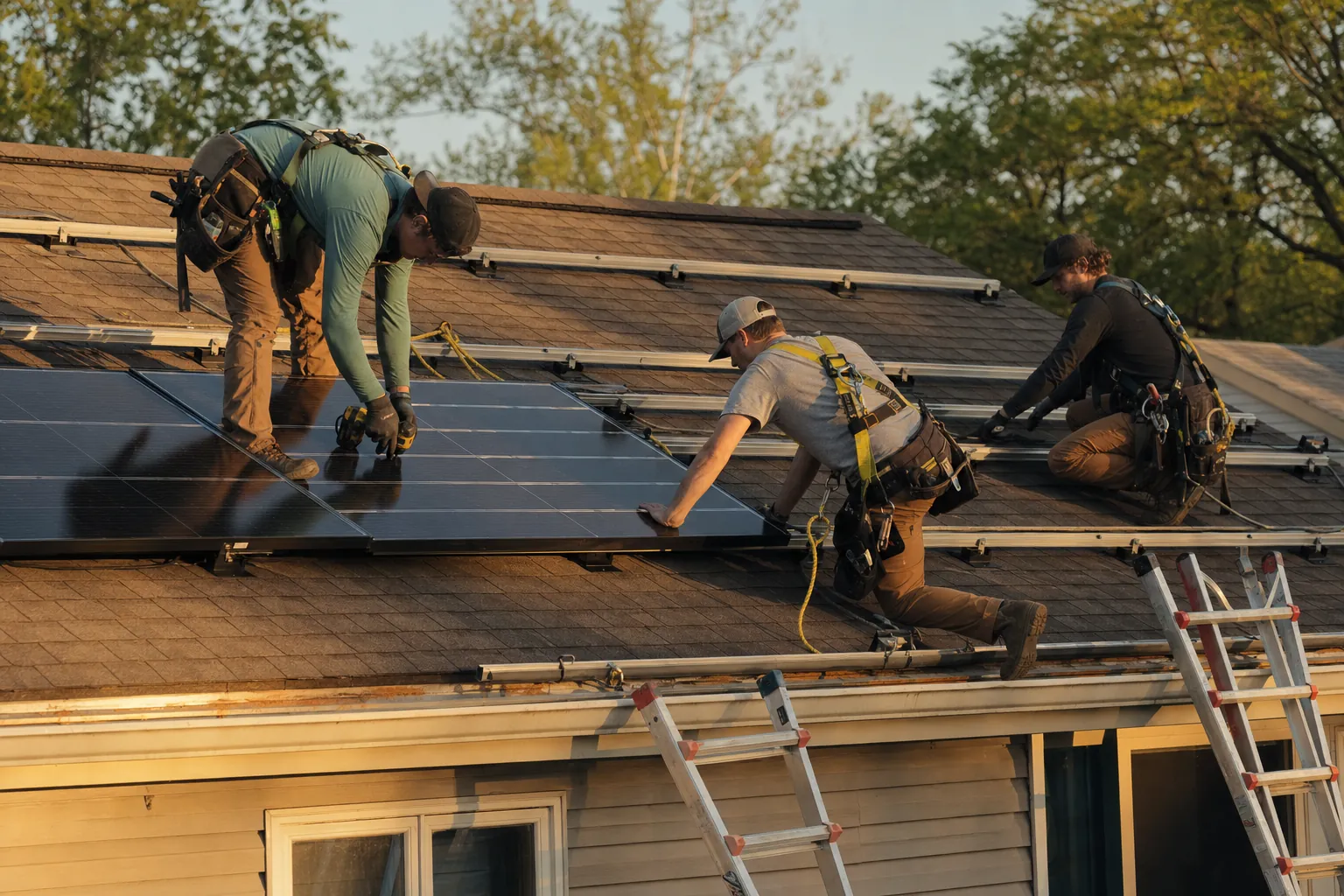
Rooftop solar is a construction project. The Department of Energy's homeowner guide notes the system will be inspected as part of installation. LBNL researchers explain that customers who can export power to the grid must sign an interconnection agreement with their utility, "which can be a lengthy and complex process, typically requiring an electrical permit."
Plug-in solar is newer. A growing number of states have passed laws that create a category for small plug-in devices, and those laws set their own rules on utility agreements and notice. Where a state hasn't acted, your utility's rules and local electrical code apply. Our permit guide explains the three layers, and your state page has the specific answer.
Net metering vs self-consumption
Net metering, as the Department of Energy defines it, means solar owners "are compensated for any solar power generation that is exported to the electricity grid." Rooftop economics have long depended on it, because a large system exports a lot at midday.
That compensation is shrinking in some places. LBNL researchers point to California's 2023 net metering change, which "significantly" cut compensation for exported power, and cite reports that rooftop payback there rose to as much as 15 years.
A plug-in kit works mainly on self-consumption: your home uses the power as it's made. It's small enough that much of its output goes to loads already running. Export rules still matter if the kit makes more than your home is using. Some kits are designed to prevent export entirely. Whether any export is allowed, and paid for, depends on your state and utility.
Portability
A plug-in kit comes off the railing or stand and goes with you. LBNL researchers list portability as a main advantage, especially for renters. Rooftop solar stays with the building, which is fine if you own it and plan to stay.

UL 3700, the certification document for plug-in systems, excludes roof-mounted PV from its scope, so putting a plug-in kit on your roof takes it outside what that certification covers.
Who each one suits
The DOE's homeowner guide recommends installing rooftop solar through "a qualified professional who holds a certification to do so." LBNL researchers note the residential rooftop market "primarily serves homeowners, with limited access for renters."
Rooftop solar suits you if you own a house with a sunny, sound roof, plan to stay long enough to recover the cost, and want to cover most of your electricity.
Plug-in solar suits you if you rent, live in a condo or apartment, have a shaded or unsuitable roof, may move in a few years, or want to start small without a loan. It also fits owners who want a small first step.
Neither may make sense if your electricity is cheap and your only spot faces north. Run the calculator before you buy anything.
For the full picture, see the plug-in solar guide.
Sources
- Tracking the Sun: Pricing and Design Trends for Distributed Photovoltaic Systems in the United States, 2024 Edition (Lawrence Berkeley National Laboratory)emp.lbl.gov
- Barriers to Balcony Solar and Plug-In Distributed Energy Resources in the United States (Gerber et al., Lawrence Berkeley National Laboratory, Energies 2025)osti.gov
- Homeowner's Guide to Going Solar (US Department of Energy)energy.gov
- FAQs for modification of sections 25C, 25D ... under Public Law 119-21 (IRS)irs.gov
- UL 3700 Outline of Investigation for Interactive Plug-In PV (PIPV) Equipment and Systems, Edition 1 (UL Standards & Engagement store listing)shopulstandards.com
- Balcony Solar Kits (Bright Saver product page, for its own prices and specs)brightsaver.org
Questions
Is plug-in solar cheaper than rooftop solar?
Much cheaper up front, because it's much smaller. Lawrence Berkeley National Laboratory found the middle 60% of residential rooftop systems installed in 2023 cost $3.2 to $5.5 per watt, with a median size of 7.4 kW. Plug-in kits run from a few hundred watts to a little over a kilowatt and skip most installation and permitting costs.
Does rooftop solar need a permit and a utility agreement?
Usually both. LBNL researchers note that customers who can export power must sign an interconnection agreement, which typically requires an electrical permit. Plug-in solar rules depend on your state.
Can I get the federal tax credit for either one?
Not for systems installed in 2026. The IRS says the Residential Clean Energy Credit (25D) is not allowed for expenditures made after December 31, 2025.
Can I take solar with me when I move?
A plug-in kit, yes: it comes off the railing or stand and plugs in at the next place. A rooftop system is attached to the building and wired into it.