Is plug-in solar legal in Utah? (2026)
Yes. Utah allows plug-in solar under HB 340, in effect since 2025-05-07. The limit is 1,200 watts. No interconnection agreement is required.
Legal
Utah law lets you plug a portable solar device of up to 1,200 watts into a standard 120-volt outlet without an interconnection agreement, utility approval or utility fees.
- Watt cap
- 1,200 W
- Permit
- —
- Interconnection
- Not required
- Utility notice
- —
- Equipment
- Certified by Underwriters Laboratories or an equivalent nationally recognized testing laboratory, and meets the most recent National Electrical Code (statute names no specific UL standard number).
- Law
- HB 340 · Solar Power Amendments
- Signed
- 2025-03-25
- Effective
- 2025-05-07
Official sources
- HB 340, le.utah.govle.utah.gov/Session/2025/bills/enrolled/HB0340.pdf
- HB 340, le.utah.govle.utah.gov/~2025/bills/static/HB0340.html
- HB 340, le.utah.govle.utah.gov/xcode/Title54/Chapter15/54-15-S601.html
Research notes
Codified at Utah Code 54-15-601 (and definition in 54-15-102(13)). 'Portable solar generation device': moveable PV device, max power output not more than 1,200 W, connects through a standard 120-volt AC outlet, intended primarily to offset part of the customer's consumption, meets current NEC, certified by UL or equivalent NRTL. Must include a device/feature preventing it from energizing the building's electrical system during an outage. Exempt from interconnection requirements (54-15-106) and interconnection agreements (54-15-103); not part of net metering. Utility may not require approval before installing/using, any fee or charge, or additional controls/equipment; utility not liable for damage or injury. No utility-notice requirement appears in the statute (utilityNotice=null: the statute is silent on notice; it only bars requiring approval). Statute is silent on building/electrical permits, so permitRequired=null. No landlord/HOA provisions in the statute. Standard outlet (not dedicated circuit). Utah Code site shows the 2025-05-07 version as the only/current version of 54-15-601 and 54-15-102 as of 2026-09-20, so no 2026 amendment has taken effect; a web search found no 2026 Utah bill amending this section (not exhaustive). Signed date is from the legislature's official bill-status data ('Governor Signed' 3/25/2025); votes House 72-0-3, Senate 26-0-3.
“—” means our record has no sourced value · Not legal advice
If you rent
The state law is on your side, but your lease still decides what you can attach to the building. Ask your landlord before you clamp anything to a railing. This email is a starting point:
If you own your home
You can install within the limits above. If you’re in a condo or HOA, the association’s rules on balconies and exterior equipment still apply. Above 1,200 watts the plug-in law no longer applies, and a system goes through the standard permit and interconnection process.
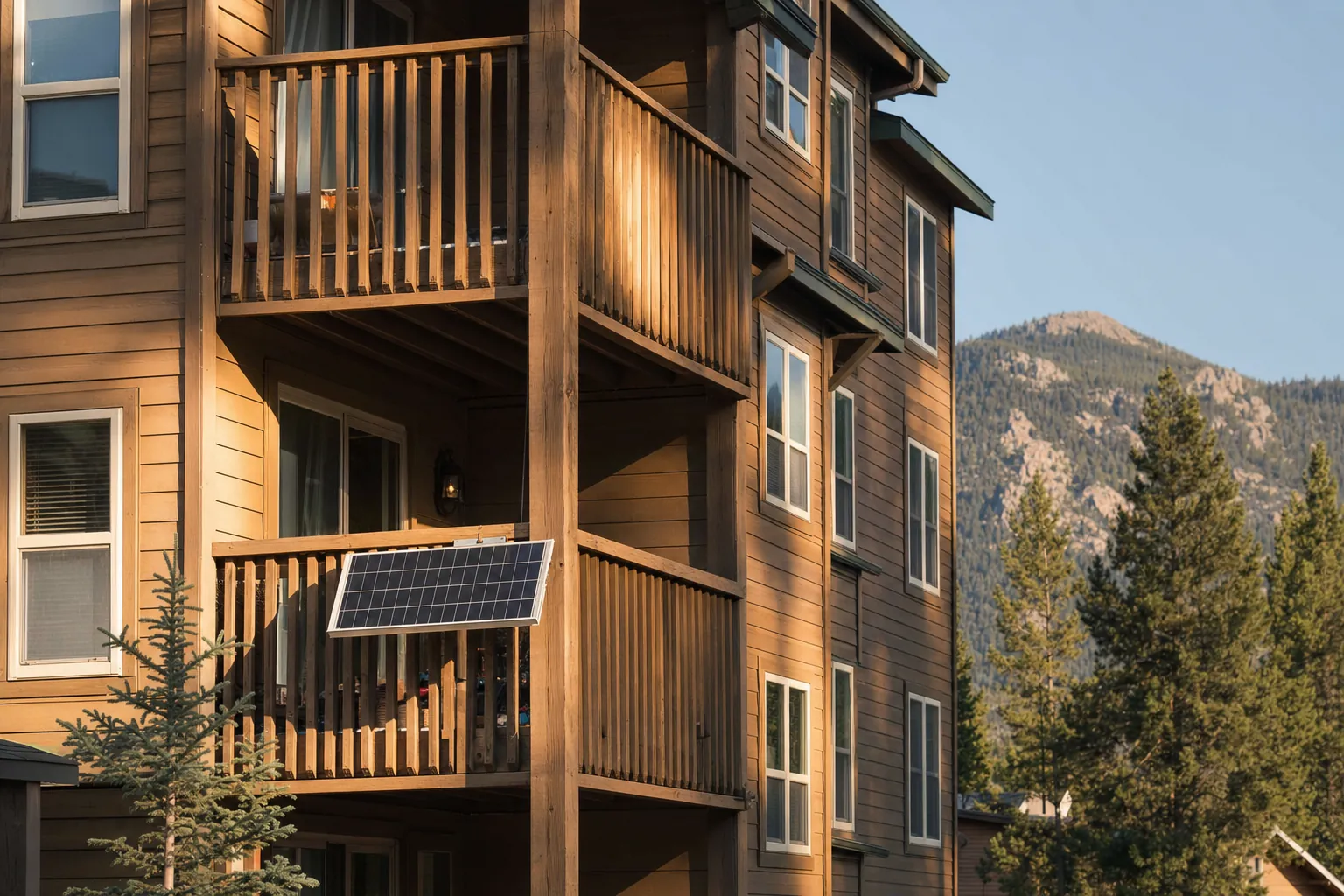
What Utah's law says
A portable solar generation device is capped at 1,200 watts.
“has a maximum power output of not more than 1,200 watts”
le.utah.gov ↗It plugs into a standard 120-volt outlet.
“is designed to be connected to a building's electrical system through a standard 120-volt alternating current outlet”
le.utah.gov ↗The device must have a feature that keeps it from energizing the building during a power outage.
“A portable solar generation device shall include a device or feature that prevents the system from energizing the building's electrical system during a power outage.”
le.utah.gov ↗The utility may not require approval before you install or use the device. It also may not charge a fee or require extra equipment.
“may not require a customer using a portable solar generation device to: (i) obtain the electrical corporation's approval before installing or using the system”
le.utah.gov ↗These devices fall outside the net metering program.
“is not subject to the net metering program requirements under this chapter.”
le.utah.gov ↗
What Utah's largest utilities say
What each utility's own tariff or interconnection page says about generation a customer connects on their side of the meter.
Rocky Mountain Power
Rocky Mountain Power's customer generation page describes the process for rooftop solar and other small systems: an online application with a photo of the meter, then waiting for approval, getting permits, inspection and a meter installation before switching on. The page does not mention portable or plug-in devices.
“Submit an online application with the proposed system, including a picture of the meter. Wait for review and confirmation authorizing the interconnection.”
rockymountainpower.net ↗
Who to ask
- Utah Division of Public Utilities (informal complaints for the Public Service Commission) ↗
Handles informal complaints against PSC-regulated utilities such as Rocky Mountain Power. It does not handle municipal utilities, and unresolved cases can go to the PSC as formal complaints.
Sources read and quotes checked 2026-09-22.
What an 800 W kit makes in Utah
A railing-mounted panel hangs close to vertical, so it makes less than a tilted rooftop panel. These figures use a vertical panel on purpose.
Yearly output
969
kWh / year
800W, south-facing railing, no shade
Electricity rate
13.33
¢ / kWh
EIA, 2025-07 to 2026-06
Yearly savings
$103
per year, before kit cost
assumes 80% self-use
Sun
6.24
peak sun hours / day
optimal tilt, Salt Lake City
Output is modeled at Salt Lake City with PVGIS 5.3, European Commission Joint Research Centre, ERA5 weather data.
Kits sold in the US
These kits are sold in the US. We rank them on published specs, certification and price and have not tested them. Utah's law covers systems up to 1,200 W, so check the kit's output against that.
Some links in this section are affiliate links. We earn a commission if you buy through them, at no extra cost to you.
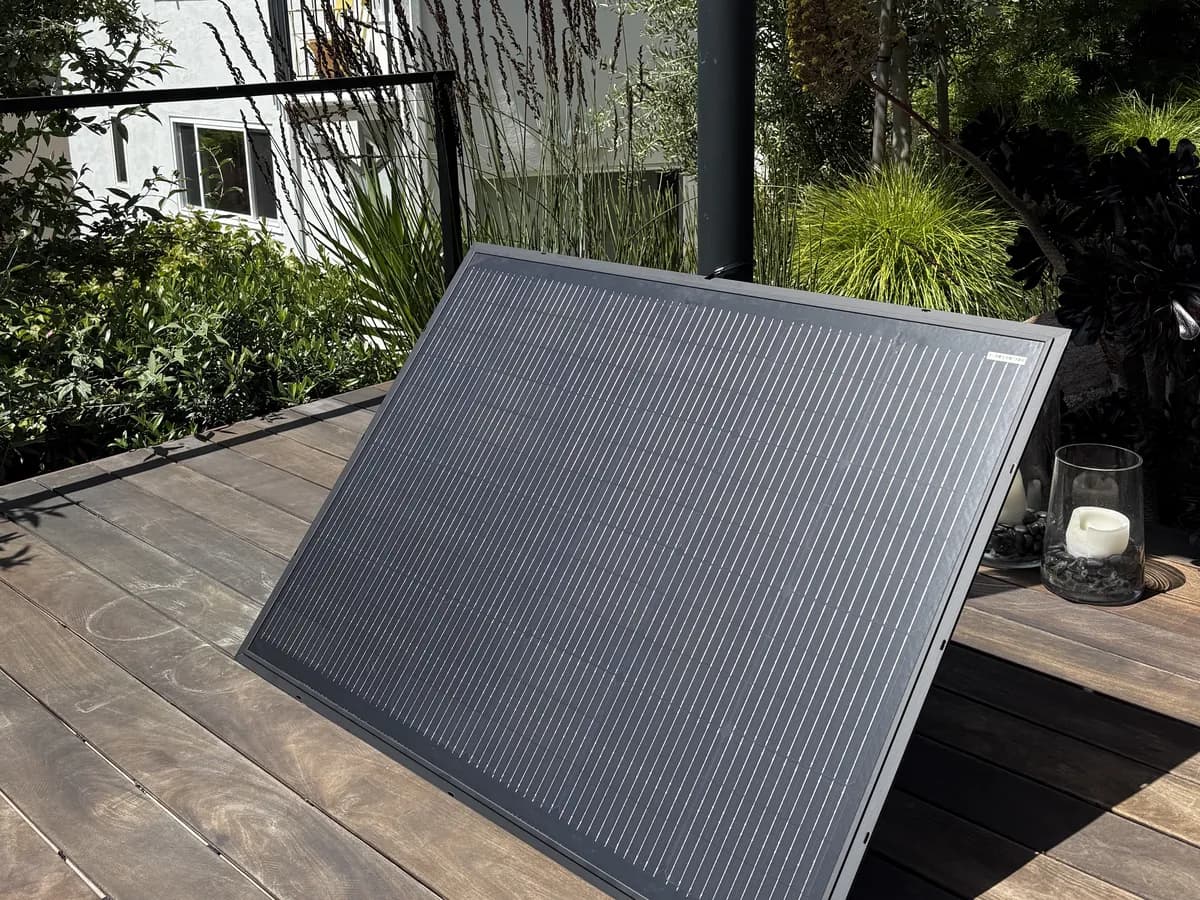
Lowest cost per watt
Bright Saver Balcony 360 W
360 W
Two panels and a 360 W microinverter, sold at cost by a nonprofit. The cheapest way into plug-in solar we can find, and the only kit here whose inverter is described against UL 3700.
- Panels
- Two 180 W panels, 46 × 34 in, 11 lb each
- Certification
- Inverter listed as “UL 3700 compliant” (Hoymiles HiFlow Pro LV)
- Warranty
- 12-year inverter warranty
- Price
- $414.17 as of 2026-09-22
At-cost price from a 501(c)(3) nonprofit, not a retail price.
Bright Saver is a nonprofit we cover editorially. We earn nothing from this link.
Built-in battery
EcoFlow STREAM Ultra
800 W
800 W of on-grid output with 1.92–11.52 kWh of storage, so power made in the afternoon can run the evening. Pairing it with the STREAM Microinverter raises output to 1,200 W.
- Panels
- Not included
- Certification
- “UL1741-Certified & IEEE1547-Certified”
- Warranty
- 10 years
- Price
- Not published
EcoFlow lists no price until you configure the system.
Panels are not included, and EcoFlow's own page says plug-and-play use is currently available only in Utah, under H.B. 340.
Complete kit on Amazon
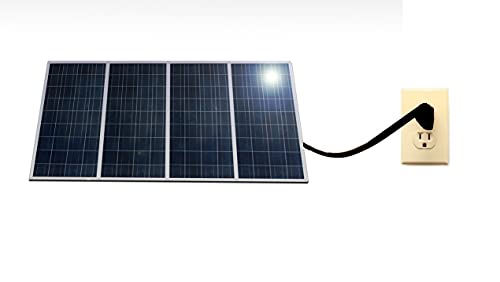
PluggedSolar 800 W Plug and Play
800 W
A complete kit sold as one box on Amazon. The panels sit in the sun and the cord goes to an outlet, so nothing is hard-wired.
- Panels
- Four 200 W panels, with a microinverter and a 50 ft cord
- Certification
- “UL 1741 code compliant for anti-islanding safety protection” (pluggedsolar.com); no lab listing published
- Warranty
- Not published
- Price
- $1,395.00 as of 2026-09-22
Amazon price read through the Creators API.
PluggedSolar publishes no lab listing for this kit and no warranty term we could find. Its Amazon listing estimates 1,500 kWh a year, which assumes panels angled at the sun.
We earn a commission if you buy through this link. It costs you nothing extra.
Most power
Craftstrom 1200 W Plug-in Solar Kit
1,200 W
Six panels and three 350 W microinverters with a smart power meter, for a yard, fence or long deck. The most output of anything here, at the highest price per watt.
- Panels
- Six 200 W bifacial semi-flexible panels
- Certification
- Inverters “ETL-certified to UL 1741 and IEEE 1547”
- Warranty
- 10 years on panels, inverters and power meter
- Price
- $3,309.00 as of 2026-09-22
Listed by the reseller My Own Watts.
Craftstrom sells through dealers, so prices differ by seller. We have no affiliate relationship with any of them.
- Anker SOLIX sells balcony systems in Europe, not in the US. We'll add them when a US model ships.
Questions about Utah
Is plug-in solar legal in Utah?
Yes. Utah allows plug-in solar under HB 340, in effect since 2025-05-07. The limit is 1,200 watts. No interconnection agreement is required.
Is there a wattage limit in Utah?
Yes. Utah's law covers systems up to 1,200 watts.
How much could an 800W kit save in Utah?
About $103 a year, before the kit's cost, for an unshaded 800W panel on a south-facing railing at 13.33¢/kWh. That assumes you use 80% of what it makes. Run the calculator for your own numbers.