Is plug-in solar legal in New Hampshire? (2026)
Not yet. New Hampshire passed SB 540, which takes effect 2027-01-01. The limit is 1,200 watts.
Legal from 2027-01-01
New Hampshire enacted SB 540 (Chapter 262) allowing one certified plug-in solar system of up to 1,200 watts AC per metered customer without utility approval or an interconnection agreement; it takes effect January 1, 2027.
- Watt cap
- 1,200 W
- Permit
- —
- Interconnection
- Not required
- Utility notice
- Varies
- Equipment
- Must be certified by a nationally recognized testing laboratory to nationally recognized safety standards applicable to distributed energy resources and plug-in solar generation systems (RSA 362-A:10, I). No specific UL standard number is named.
- Law
- SB 540 · relative to plug-in solar generation systems
- Signed
- 2026-07-02
- Effective
- 2027-01-01
Official sources
- SB 540, gc.nh.govgc.nh.gov/bill_status/billinfo.aspx?id=1317&inflect=2
- SB 540, gc.nh.govgc.nh.gov/bill_status/legacy/bs2016/billText.aspx?sy=2026&id=1317&txtFormat=html
Research notes
2026 NH Laws Chapter 262 (SB 540-FN). Adds RSA 362-A:1-a, IV-a and RSA 362-A:10. One plug-in system per metered customer, maximum inverter output 1,200 W AC. Connects through a receptacle or other non-permanent wiring connection (no dedicated-circuit requirement stated). Utility may not require approval, interconnection review or executed interconnection agreement, fees (other than usage charges), or extra equipment. A utility MAY develop a method for the customer to inform it of the system wattage after installation, for notification purposes only (hence utilityNotice 'varies'). Must be installed and operated per the state building code and manufacturer instructions; that building-code section (RSA 155-A:16) takes effect only when the Department of Energy commissioner certifies that a nationally recognized standard exists for safely connecting plug-in systems. Statute does not address local permits, so permitRequired is null. Department of Energy must maintain a consumer information page. Utilities not liable for damage from customer systems. No landlord/HOA provisions in the chaptered text. EFFECTIVE DATE DISCREPANCY: the official bill-status docket line reads 'II. Remainder Effective 07/02/2026', but the chaptered final text (262:7, II) says the remainder takes effect January 1, 2027. The chaptered law text controls, so effectiveDate = 2027-01-01; status is 'legal' (enacted) with a future effective date.
“—” means our record has no sourced value · Not legal advice
If you rent
The law isn't in effect yet (it starts 2027-01-01), and even after it is, your lease still decides what you can attach to the building. Ask your landlord before you clamp anything to a railing. This email is a starting point:
If you own your home
Once the law takes effect on 2027-01-01, you can install within the limits above. If you’re in a condo or HOA, the association’s rules on balconies and exterior equipment still apply. Above 1,200 watts the plug-in law no longer applies, and a system goes through the standard permit and interconnection process.
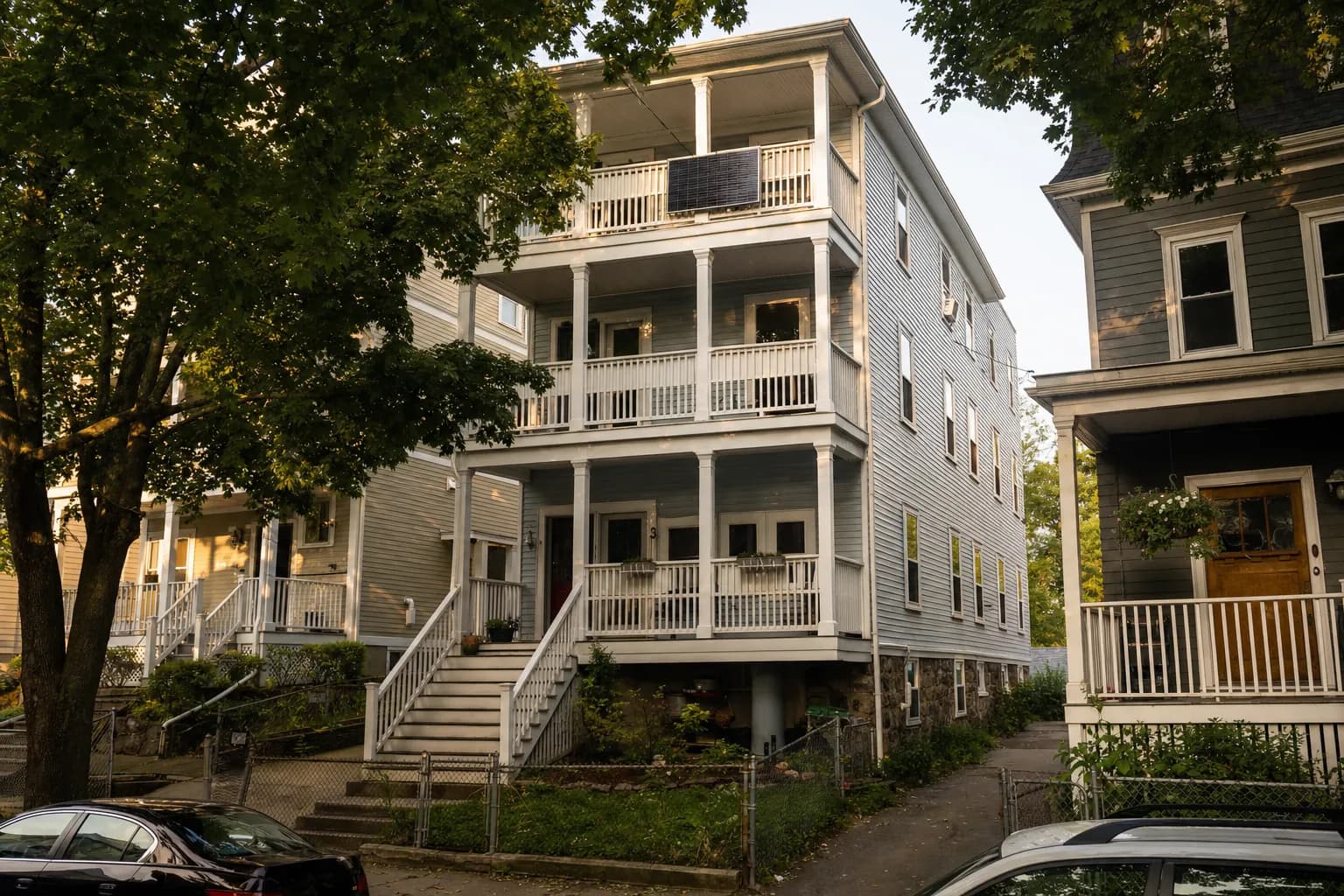
What New Hampshire's law says (takes effect 2027-01-01)
One plug-in system per metered customer, with a maximum inverter output of 1,200 watts AC.
“Each metered customer shall be allowed a maximum of one plug-in solar generation system with a maximum inverter output of 1,200 watts AC.”
gc.nh.gov ↗The system must be certified by a nationally recognized testing lab. The law names no specific UL number.
“Plug-in solar generation systems shall be certified by a nationally recognized testing laboratory to meet nationally recognized safety standards applicable to distributed energy resources and plug-in solar generation systems.”
gc.nh.gov ↗The utility cannot require approval, an interconnection review or agreement, or a fee beyond usage charges.
“An electric distribution utility shall not require a customer … to: (a) Obtain electric distribution utility approval before installing or using the system; (b) Complete an interconnection review or obtain an executed interconnection agreement; (c) Pay any fee related to the system”
gc.nh.gov ↗A utility may set up a way for you to report the system's wattage after installing, but only as notice, not approval.
“The applicable electric distribution utility may develop a method for the customer to inform the electric distribution utility of the wattage of the system at the customer's service address subsequent to installation. Such information shall be for notification purposes only.”
gc.nh.gov ↗Most of the act takes effect January 1, 2027.
“II. The remainder of this act shall take effect January 1, 2027.”
gc.nh.gov ↗
What New Hampshire's largest utilities say
What each utility's own tariff or interconnection page says about generation a customer connects on their side of the meter.
Eversource New Hampshire
For conventional rooftop solar, Eversource expects your contractor to apply for net metering as part of interconnection. The page does not mention plug-in or portable solar.
“Your solar contractor will apply for net metering for you when interconnecting you to the grid.”
eversource.com ↗Unitil
Unitil tells customers not to energize a generating system before it approves. The page does not mention plug-in or portable solar.
“It is very important you do not energize your system until you receive the approval to energize/interconnect your system.”
unitil.com ↗New Hampshire Electric Cooperative
NHEC points members to its terms and rate schedule for interconnection policy and export compensation, and runs an online application. The page does not mention plug-in or portable solar.
“Please reference NHEC's Terms and Conditions Section X – Net Metering and Schedule of Rates and Fees for more information regarding our interconnection policies, rates and compensation for exports.”
nhec.com ↗
Sources read and quotes checked 2026-09-22.
What an 800 W kit makes in New Hampshire
A railing-mounted panel hangs close to vertical, so it makes less than a tilted rooftop panel. These figures use a vertical panel on purpose.
Yearly output
780
kWh / year
800W, south-facing railing, no shade
Electricity rate
26.45
¢ / kWh
EIA, 2025-07 to 2026-06
Yearly savings
$165
per year, before kit cost
assumes 80% self-use
Sun
4.72
peak sun hours / day
optimal tilt, Manchester
Output is modeled at Manchester with PVGIS 5.3, European Commission Joint Research Centre, ERA5 weather data.
Kits sold in the US
These kits are sold in the US. We rank them on published specs, certification and price and have not tested them. New Hampshire's law isn't in effect yet (it starts 2027-01-01). New Hampshire's law covers systems up to 1,200 W, so check the kit's output against that.
Some links in this section are affiliate links. We earn a commission if you buy through them, at no extra cost to you.
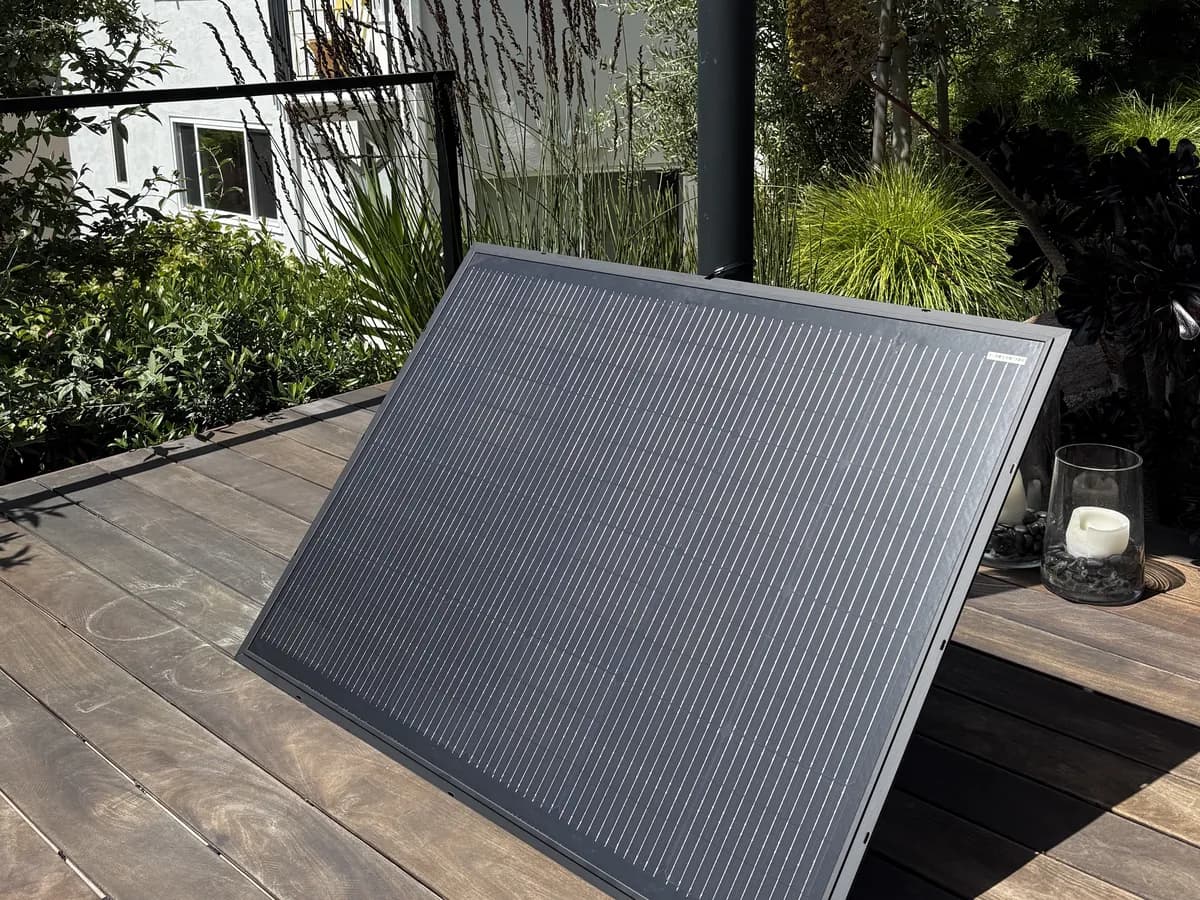
Lowest cost per watt
Bright Saver Balcony 360 W
360 W
Two panels and a 360 W microinverter, sold at cost by a nonprofit. The cheapest way into plug-in solar we can find, and the only kit here whose inverter is described against UL 3700.
- Panels
- Two 180 W panels, 46 × 34 in, 11 lb each
- Certification
- Inverter listed as “UL 3700 compliant” (Hoymiles HiFlow Pro LV)
- Warranty
- 12-year inverter warranty
- Price
- $414.17 as of 2026-09-22
At-cost price from a 501(c)(3) nonprofit, not a retail price.
Bright Saver is a nonprofit we cover editorially. We earn nothing from this link.
Built-in battery
EcoFlow STREAM Ultra
800 W
800 W of on-grid output with 1.92–11.52 kWh of storage, so power made in the afternoon can run the evening. Pairing it with the STREAM Microinverter raises output to 1,200 W.
- Panels
- Not included
- Certification
- “UL1741-Certified & IEEE1547-Certified”
- Warranty
- 10 years
- Price
- Not published
EcoFlow lists no price until you configure the system.
Panels are not included, and EcoFlow's own page says plug-and-play use is currently available only in Utah, under H.B. 340.
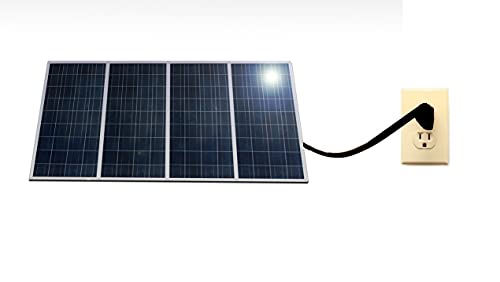
Complete kit on Amazon
PluggedSolar 800 W Plug and Play
800 W
A complete kit sold as one box on Amazon. The panels sit in the sun and the cord goes to an outlet, so nothing is hard-wired.
- Panels
- Four 200 W panels, with a microinverter and a 50 ft cord
- Certification
- “UL 1741 code compliant for anti-islanding safety protection” (pluggedsolar.com); no lab listing published
- Warranty
- Not published
- Price
- $1,395.00 as of 2026-09-22
Amazon price read through the Creators API.
PluggedSolar publishes no lab listing for this kit and no warranty term we could find. Its Amazon listing estimates 1,500 kWh a year, which assumes panels angled at the sun.
We earn a commission if you buy through this link. It costs you nothing extra.
Most power
Craftstrom 1200 W Plug-in Solar Kit
1,200 W
Six panels and three 350 W microinverters with a smart power meter, for a yard, fence or long deck. The most output of anything here, at the highest price per watt.
- Panels
- Six 200 W bifacial semi-flexible panels
- Certification
- Inverters “ETL-certified to UL 1741 and IEEE 1547”
- Warranty
- 10 years on panels, inverters and power meter
- Price
- $3,309.00 as of 2026-09-22
Listed by the reseller My Own Watts.
Craftstrom sells through dealers, so prices differ by seller. We have no affiliate relationship with any of them.
- Anker SOLIX sells balcony systems in Europe, not in the US. We'll add them when a US model ships.
Questions about New Hampshire
Is plug-in solar legal in New Hampshire?
Not yet. New Hampshire passed SB 540, which takes effect 2027-01-01. The limit is 1,200 watts.
Is there a wattage limit in New Hampshire?
Yes. New Hampshire's law covers systems up to 1,200 watts.
Do I have to tell my utility?
It varies by utility. Ask yours, and get the answer in writing.
How much could an 800W kit save in New Hampshire?
About $165 a year, before the kit's cost, for an unshaded 800W panel on a south-facing railing at 26.45¢/kWh. That assumes you use 80% of what it makes. Run the calculator for your own numbers.