Is plug-in solar legal in District of Columbia? (2026)
Not yet. District of Columbia has no law allowing plug-in solar, but B26-0602 would create one. Here is where it stands, with the official bill page.
Bill pending
D.C.'s GRID Amendment Act (B26-0602), which would exempt plug-in solar from interconnection, had a public hearing in March 2026 and is still in committee.
- Watt cap
- —
- Permit
- —
- Interconnection
- —
- Utility notice
- —
- Equipment
- —
- Law
- —
- Signed
- —
- Effective
- —
Official sources
- lims.dccouncil.govlims.dccouncil.gov/Legislation/B26-0602
- lims.dccouncil.govlims.dccouncil.gov/downloads/LIMS/61310/Introduction/B26-0602-Introduction.pdf?I
Research notes
Guiding Renewable Interconnection and Distribution (GRID) Amendment Act of 2026. The plug-in section of the introduced text says a portable solar generation device is not subject to interconnection or net metering requirements unless the owner opts in; the Electric Company may not require approval, fees, or extra controls; devices must meet the latest NEC, be certified by UL or an equivalent NRTL, and include a feature preventing energizing the building during an outage. No watt cap or definition of 'portable solar generation device' was found in the introduced text (text-extraction of the 16-page PDF; the '1,200 W' figure reported by secondary trackers is NOT confirmed). No utility-notice requirement found. Secondary trackers claim the bill was 'deferred to 2027'; not confirmed on any official page. The bill lapses if not enacted before Council Period 26 ends (general DC rule, not separately verified in this pass).
“—” means our record has no sourced value · Not legal advice
If you rent
Without a state law, you need two yeses: your landlord’s, and your utility’s. Start with the utility, because a landlord will ask whether it’s allowed. Ask these three questions and get the answers in writing:
- “Do you have an interconnection requirement for a plug-in solar device under 1,200 watts with a UL-listed inverter?”
- “If it never sends power back to the grid, does that change your answer?”
- “Can you send me that in writing, or point me to the tariff section?”
If you get a written answer, send it to hello@mlighthouse.com. We’ll add it to this page with the utility named and you left out.
If you own your home
You have the same utility question as a renter, and one more option: a conventional rooftop or ground-mount system goes through your utility’s standard interconnection process instead. It costs more and takes longer, but the rules are written down.
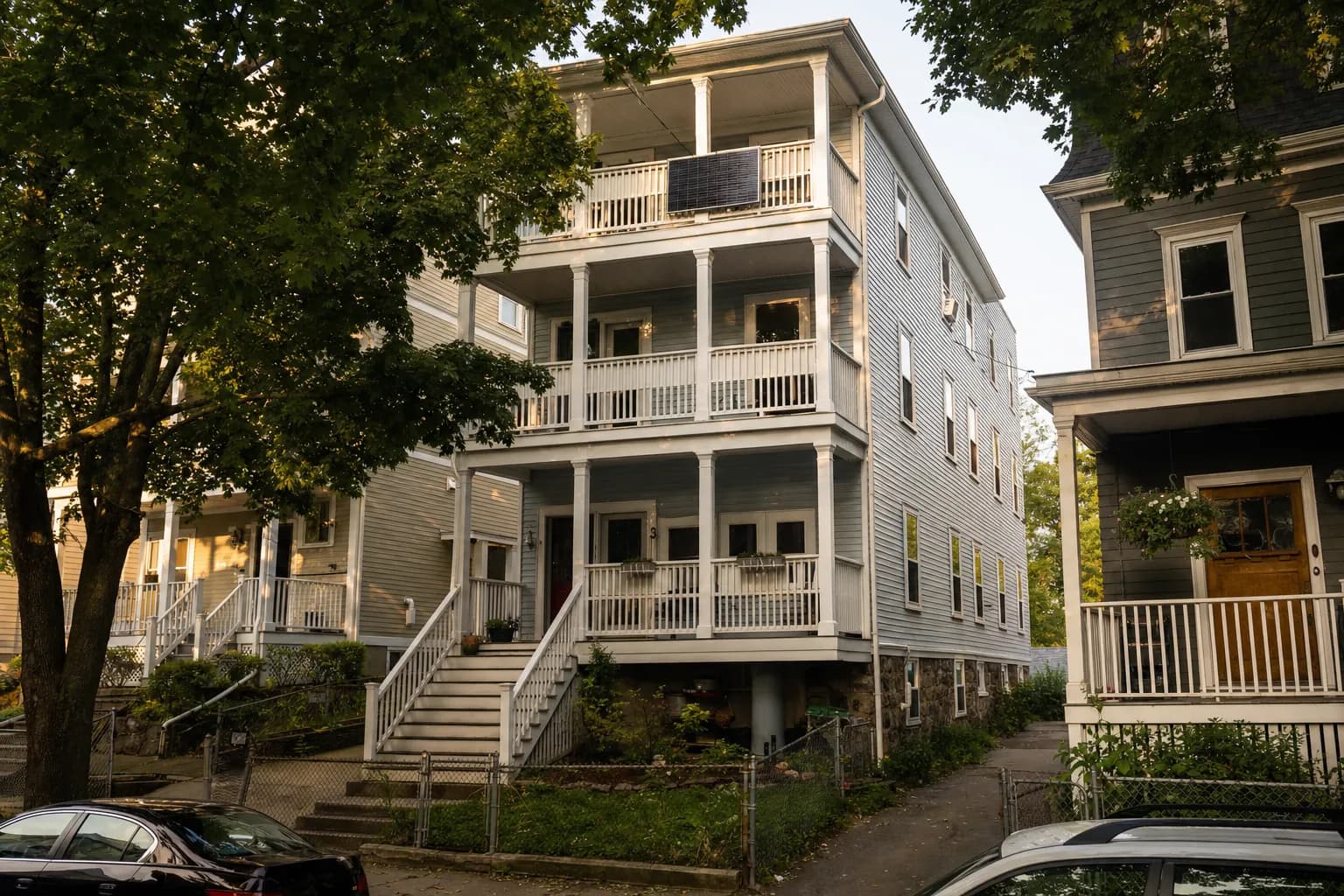
Where the bill stands
B26-0602
Introduced 2026-02-24 (Allen); referred to Committee on Transportation and the Environment 2026-03-03; public hearing 2026-03-26. LIMS tracker shows First Reading 'Not Started' as of 2026-09-20.
lims.dccouncil.govWhat an 800 W kit makes in District of Columbia
A railing-mounted panel hangs close to vertical, so it makes less than a tilted rooftop panel. These figures use a vertical panel on purpose.
Yearly output
755
kWh / year
800W, south-facing railing, no shade
Electricity rate
24.03
¢ / kWh
EIA, 2025-07 to 2026-06
Yearly savings
$145
per year, before kit cost
assumes 80% self-use
Sun
4.95
peak sun hours / day
optimal tilt, Washington
Output is modeled at Washington with PVGIS 5.3, European Commission Joint Research Centre, ERA5 weather data.
Kits sold in the US
These kits are sold in the US. We rank them on published specs, certification and price and have not tested them. District of Columbia has no plug-in solar law yet, so ask your utility before you connect one.
Some links in this section are affiliate links. We earn a commission if you buy through them, at no extra cost to you.
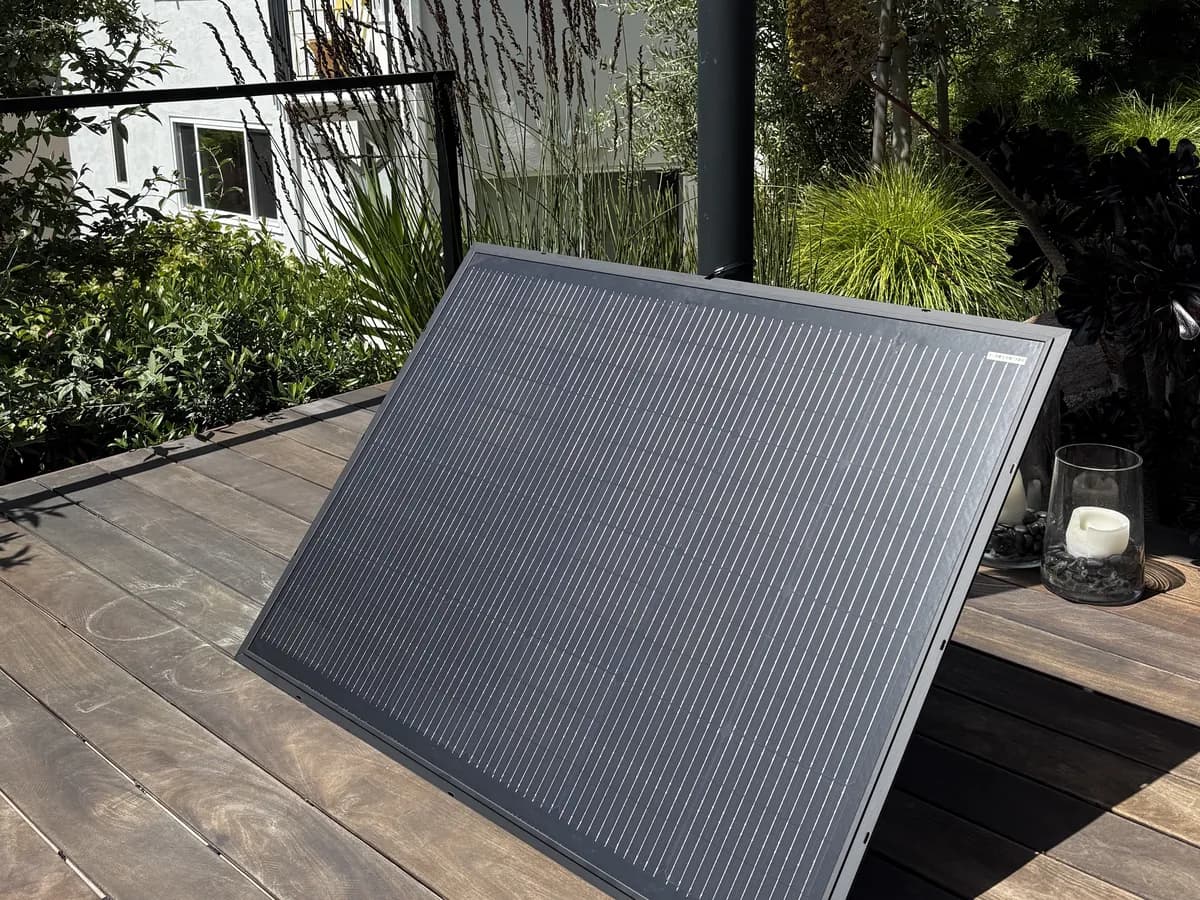
Lowest cost per watt
Bright Saver Balcony 360 W
360 W
Two panels and a 360 W microinverter, sold at cost by a nonprofit. The cheapest way into plug-in solar we can find, and the only kit here whose inverter is described against UL 3700.
- Panels
- Two 180 W panels, 46 × 34 in, 11 lb each
- Certification
- Inverter listed as “UL 3700 compliant” (Hoymiles HiFlow Pro LV)
- Warranty
- 12-year inverter warranty
- Price
- $414.17 as of 2026-09-22
At-cost price from a 501(c)(3) nonprofit, not a retail price.
Bright Saver is a nonprofit we cover editorially. We earn nothing from this link.
Built-in battery
EcoFlow STREAM Ultra
800 W
800 W of on-grid output with 1.92–11.52 kWh of storage, so power made in the afternoon can run the evening. Pairing it with the STREAM Microinverter raises output to 1,200 W.
- Panels
- Not included
- Certification
- “UL1741-Certified & IEEE1547-Certified”
- Warranty
- 10 years
- Price
- Not published
EcoFlow lists no price until you configure the system.
Panels are not included, and EcoFlow's own page says plug-and-play use is currently available only in Utah, under H.B. 340.
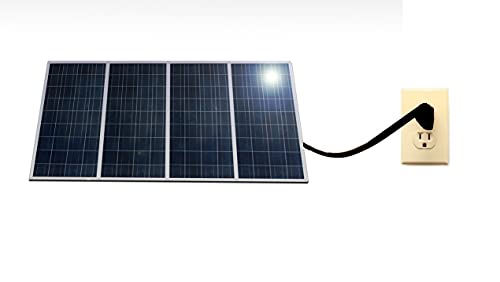
Complete kit on Amazon
PluggedSolar 800 W Plug and Play
800 W
A complete kit sold as one box on Amazon. The panels sit in the sun and the cord goes to an outlet, so nothing is hard-wired.
- Panels
- Four 200 W panels, with a microinverter and a 50 ft cord
- Certification
- “UL 1741 code compliant for anti-islanding safety protection” (pluggedsolar.com); no lab listing published
- Warranty
- Not published
- Price
- $1,395.00 as of 2026-09-22
Amazon price read through the Creators API.
PluggedSolar publishes no lab listing for this kit and no warranty term we could find. Its Amazon listing estimates 1,500 kWh a year, which assumes panels angled at the sun.
We earn a commission if you buy through this link. It costs you nothing extra.
Most power
Craftstrom 1200 W Plug-in Solar Kit
1,200 W
Six panels and three 350 W microinverters with a smart power meter, for a yard, fence or long deck. The most output of anything here, at the highest price per watt.
- Panels
- Six 200 W bifacial semi-flexible panels
- Certification
- Inverters “ETL-certified to UL 1741 and IEEE 1547”
- Warranty
- 10 years on panels, inverters and power meter
- Price
- $3,309.00 as of 2026-09-22
Listed by the reseller My Own Watts.
Craftstrom sells through dealers, so prices differ by seller. We have no affiliate relationship with any of them.
- Anker SOLIX sells balcony systems in Europe, not in the US. We'll add them when a US model ships.
Questions about District of Columbia
Is plug-in solar legal in District of Columbia?
Not yet. District of Columbia has no law allowing plug-in solar, but B26-0602 would create one. Here is where it stands, with the official bill page.
When could plug-in solar become legal in District of Columbia?
B26-0602: Introduced 2026-02-24 (Allen); referred to Committee on Transportation and the Environment 2026-03-03; public hearing 2026-03-26. LIMS tracker shows First Reading 'Not Started' as of 2026-09-20.
How much could an 800W kit save in District of Columbia?
About $145 a year, before the kit's cost, for an unshaded 800W panel on a south-facing railing at 24.03¢/kWh. That assumes you use 80% of what it makes. Run the calculator for your own numbers.